


What to know before buying the A80 Toyota Supra
Few Japanese performance cars carry the presence of the Toyota Supra Mk4. Its rounded bodywork, driver-focused cockpit and available twin-turbocharged inline-six made it a standout when new. Decades later, the A80 remains a centerpiece of Japanese car collecting and an enduring favorite among enthusiasts who grew up with it on screen, in magazines and at the drag strip.
Buying one today requires more than recognizing a 2JZ engine or finding the right rear wing. Two Supras that look nearly identical can differ dramatically in factory specification, mechanical condition, modification quality and value. A factory Turbo six-speed, a naturally aspirated car with a turbo conversion and a Japanese-market import should each be evaluated on its own merits.
For buyers, the strongest starting point is a sound body, verifiable identity and a well-documented ownership and maintenance history. The right specification matters, but an impressive badge cannot make up for a poor car underneath.
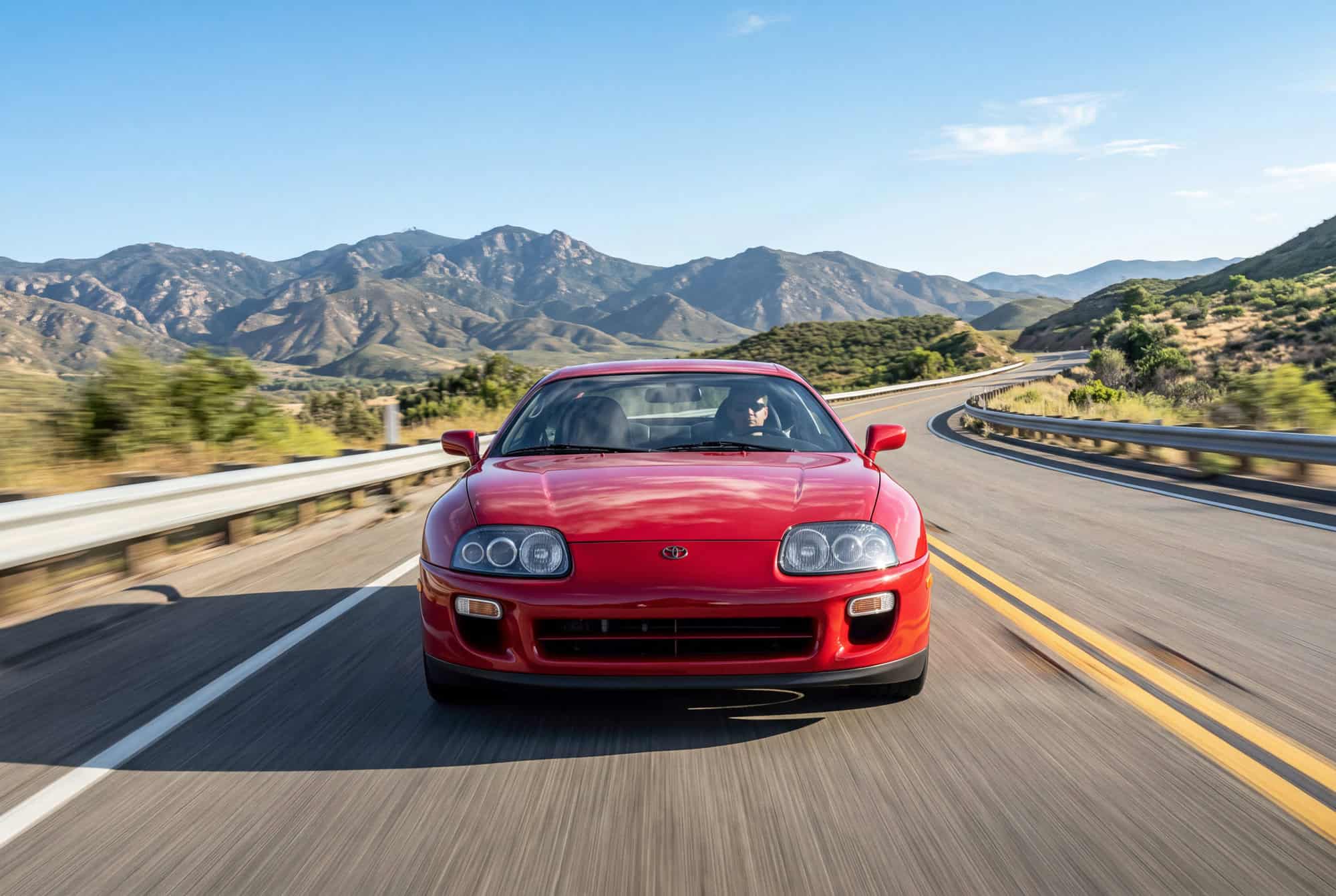
Understanding the Mk4 Supra
The fourth-generation Supra is commonly called the Mk4, MkIV or A80. JZA80 is its chassis designation. It arrived in 1993, remained in the U.S. lineup through the 1998 model year and continued in Japan through 2002. Unlike the later GR Supra, the Mk4 used Toyota’s 2JZ engine family throughout its range.
Every factory Mk4 combined a front-mounted 3.0-liter inline-six with rear-wheel drive and a 2+2 cabin. The important split is between the naturally aspirated 2JZ-GE and twin-turbocharged 2JZ-GTE. Neither the JZA80 designation nor a six-cylinder engine establishes that a car left the factory as a Turbo.
Core U.S. specifications
| Version | Engine | Advertised factory output | Factory transmission choices |
| 1993–1997 non-Turbo | 3.0-liter 2JZ-GE inline-six | 220 hp | Five-speed manual or four-speed automatic, depending on year and specification |
| 1998 non-Turbo | 3.0-liter 2JZ-GE with VVT-i | 225 hp | Availability varied by emissions market |
| 1993–1998 Turbo | 3.0-liter sequential twin-turbo 2JZ-GTE | 320 hp | Getrag six-speed manual or four-speed automatic; U.S. 1996 Turbo models were automatic only |
The 220-hp non-Turbo and 320-hp Turbo ratings are documented in Toyota’s period U.S. product information. These are U.S. ratings, not universal specifications for every A80. Toyota returned the U.S. Turbo six-speed for 1997, when the lineup also received detail updates and 15th Anniversary badging. For 1998, Turbo availability was restricted in California-emissions states. Verify each car’s original market and equipment.
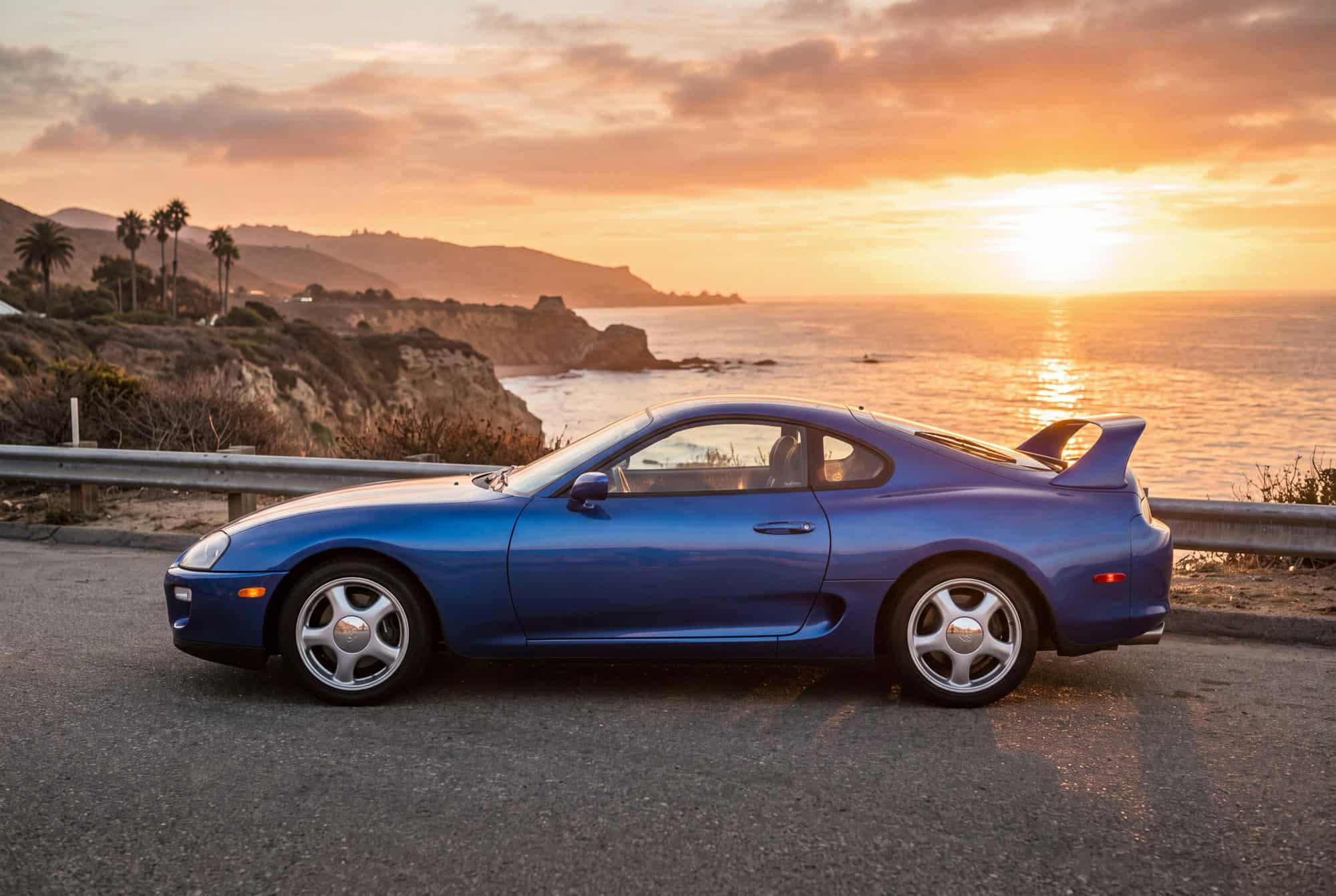
U.S. cars and Japanese imports
An original U.S.-market Supra offers left-hand drive and specifications familiar to American buyers and service providers. A Japanese domestic market example opens up a wider range of years and configurations, generally with right-hand drive.
Common Japanese grades include the naturally aspirated SZ and SZ-R, plus turbocharged RZ, RZ-S and GZ variants. Equipment and transmissions changed during production; some later SZ-R cars had a factory six-speed despite being non-turbo. A six-speed shifter therefore does not prove factory Turbo status.
At launch, Toyota rated Japanese twin-turbo models at 280 PS, approximately 276 hp. That differs from the U.S. Turbo’s 320-hp rating. Market-specific turbochargers, supporting components and later updates mean buyers should identify the actual engine and hardware before ordering parts or assessing modifications.
For a Japanese import, request the export certificate, translated records where available, import documents and current title. Compare the chassis number across the car and paperwork. Have a knowledgeable specialist verify identification plates and model information rather than relying on an online listing’s trim description.
A U.S. vehicle-history report is useful, but it may cover only the period after importation. Japanese inspection records, service invoices and independently verified auction documentation can help establish earlier mileage and condition.
Which Mk4 Supra should you buy
The factory Turbo six-speed
For buyers focused on original specification and broad collector recognition, a documented factory Turbo with its original six-speed configuration deserves close attention. The combination captures much of what made the model famous.
Paying the premium makes sense only when the car’s identity supports it. Verify the original drivetrain configuration, inspect its current components and establish whether major changes have been reversed. A factory Turbo returned to standard appearance may still have a long history of high-output use.
The factory Turbo automatic
An automatic can suit a buyer who wants the twin-turbo driving experience with easier operation in traffic. Evaluate it as a complete car rather than treating a manual swap as an inevitable next step.
If a swap is already planned, price the entire project first: transmission, clutch, pedals, hydraulics, driveshaft, differential compatibility, wiring, interior pieces and labor. Compare that total with buying a documented manual car from the outset.
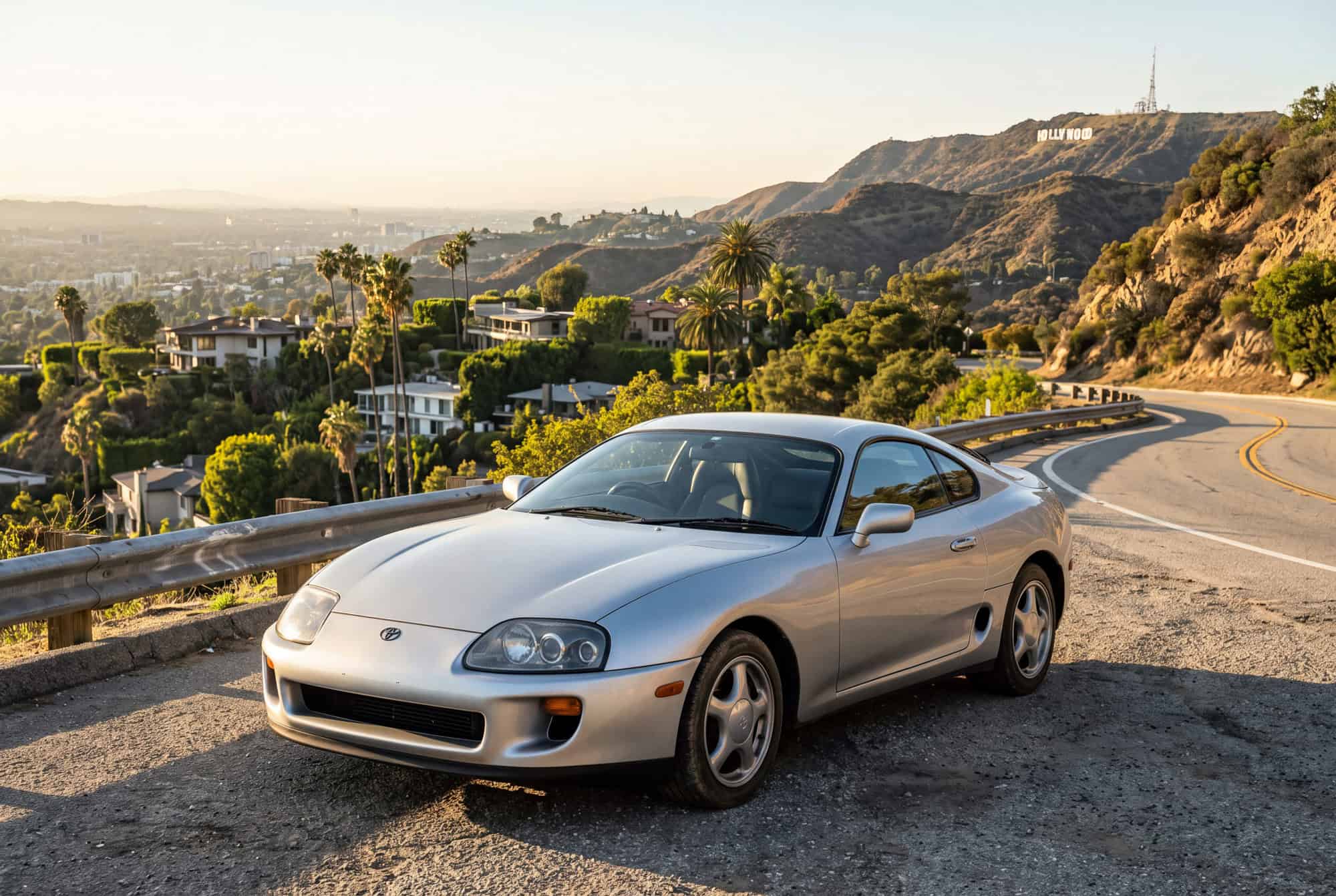
The naturally aspirated Supra
A non-Turbo can be a rewarding way to enjoy the A80’s shape, cabin and straight-six character without making maximum acceleration the priority. It also deserves an inspection just as thorough as a Turbo’s.
A clean naturally aspirated car should not automatically become a turbo project. If the eventual goal is a factory Turbo ownership experience, compare the full cost and compromises of conversion before purchasing.
Hardtop or Sport Roof
A fixed-roof coupe suits buyers who prefer a permanent roof. The removable Sport Roof adds open-air appeal. On a removable-roof car, inspect seals, mounting points, fasteners and interior evidence of water entry. Confirm the panel fits correctly and that its storage hardware and removal tools are present where applicable.
For either body style, buy on condition and your intended use. A roof preference should not outweigh structural damage or a history that cannot be verified.
Factory Turbo versus a turbo conversion
The phrase “turbo Supra” can describe several very different cars: an original twin-turbo model, a factory Turbo converted to a single turbo, a 2JZ-GE car fitted with forced induction, or a non-Turbo chassis receiving a complete drivetrain swap.
Ask the seller to establish both what the car was and what it is now. Engine appearance alone cannot do that.
For a conversion, request a parts list, dated invoices, builder details, ECU and calibration information, fuel requirements, and evidence of supporting brake, cooling and drivetrain work. Identify the transmission and differential rather than accepting “six-speed conversion” as a complete description.
A professionally built car can be enjoyable and desirable to the right buyer. Its workmanship, usability and documentation should justify its price. Money spent on parts does not automatically translate into the same increase in resale value.
Inspecting the 2JZ engine
The 2JZ’s reputation should encourage careful buying rather than replace it. Ask to see a genuinely cold start. Arrange for a Supra specialist to inspect the car before purchase, with additional testing guided by its condition and modification history.
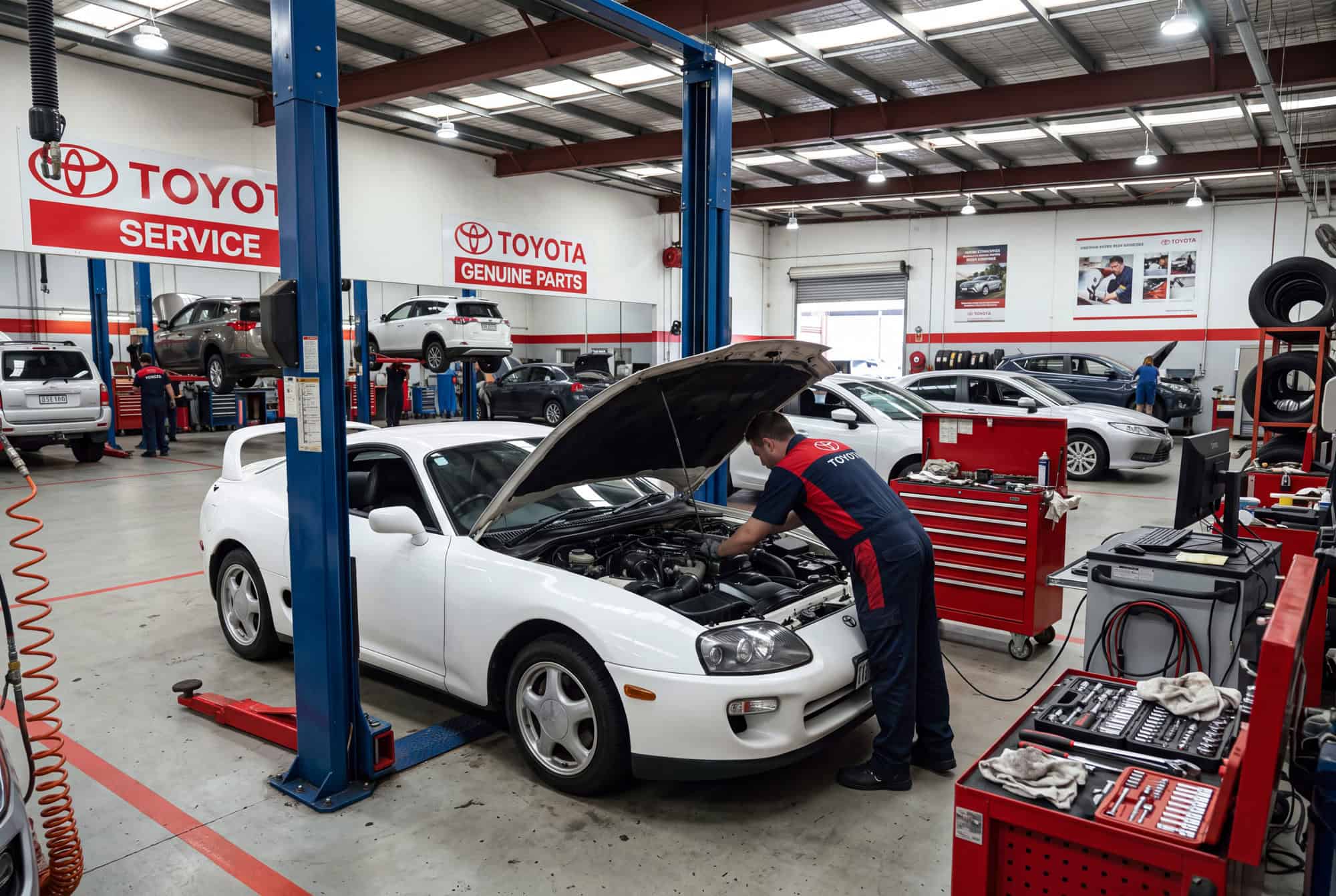
Maintenance history
Request dated evidence of timing-belt work, along with the associated tensioner, idler and water-pump work where performed. Both 2JZ engine versions use a timing belt. Have the shop assess service needs using the correct schedule for the car and the actual age of its components.
If the seller cannot establish when major service occurred, include that work in the purchase budget. A low odometer reading does not document the age of a belt, hose or seal.
Leaks and cooling system condition
Ask the inspector to examine the cam-cover area, front engine seals, oil-pan area and rear of the engine for leaks. Inspect radiator condition, coolant hoses, reservoir, fan operation and signs of previous overheating. The crankshaft pulley and its rubber damper also deserve a condition check.
A freshly cleaned engine bay may simply show good preparation. It also makes a post-test-drive inspection useful for revealing active seepage.
Smoke and engine health
Observe startup, warm idle and operation after a full warm-up. Persistent smoke, misfires, abnormal noises, coolant loss or unexplained oil consumption call for diagnosis before purchase.
Compression and leak-down testing can help assess an engine when indicated, especially on modified cars. Ask for the actual results and the technician’s interpretation. An old dyno sheet is not a substitute for a current mechanical assessment.
Inspecting the turbo system
On a factory twin-turbo car, have the shop inspect the turbochargers and the sequential control system, including its hoses, actuators and associated plumbing. The original system brings the second turbo into operation as demand increases; transition faults can require diagnosis beyond replacing a single hose.
During an appropriate road test, ask the technician to assess power delivery, boost behavior, hesitation, smoke and unusual noises. Any meaningful performance testing should follow confirmation that the car is mechanically ready.
A single-turbo conversion needs a different assessment. Establish the turbo specification, boost setting, fuel system, ECU, calibration and required fuel. Confirm that cold starts, idle, air conditioning and ordinary traffic driving work as well as the headline power figure suggests.
Ask specifically whether an ethanol-based tune requires a particular blend, how fuel content is monitored and what happens if the required fuel is unavailable. Buy a configuration you can support locally.
Transmissions and drivetrain
Getrag six-speed
The factory Turbo’s Getrag V160 is an important part of the car’s identity. Later Japanese examples may use the related V161. Have a specialist identify the installed gearbox and confirm the rest of the drivetrain suits it.
Check operation both cold and fully warm. Ask the shop to investigate gear engagement problems, crunching, excessive whine, leaks, clutch slip, difficult selection and unusual vibration. Before accepting a problem as normal, obtain a diagnosis and a written estimate that includes actual parts availability.
Five-speed manual
The non-Turbo five-speed should be evaluated in relation to the engine currently installed. If the car has received forced induction or an engine swap, ask the builder or inspecting shop whether the gearbox, clutch and driveline are appropriate for its output and intended use.
Automatic
Assess engagement into drive and reverse, shift quality, slipping, delayed changes, fluid condition and any evidence of overheating. For a modified automatic, identify internal upgrades, cooling provisions and who performed the work.
Across all versions, inspect mounts, driveshaft components, differential operation and leaks. Have noises diagnosed before assuming that they are minor bushings or mounts.
Bodywork and accident history
Start with the shell. Inspect the underside on a lift and look beyond polished paint. Give particular attention to the sills, jacking points, wheel arches, hatch opening, spare-wheel well and evidence of water collecting inside the car.
Ask a body specialist to examine chassis rails, suspension attachment areas, inner panels, welds and seam sealer if repairs are suspected. Check paint thickness, panel alignment and overspray alongside the paperwork.
A quality repaint is not automatically a reason to reject a Supra. The reason for it, the quality of the preparation and the condition beneath the paint matter. Ask for photographs and invoices documenting restoration or collision repairs.
Body kits deserve their own inspection. Look for cut metal, altered bumper supports, poor mounting, reduced ground clearance and changes that would be expensive to reverse. Confirm whether any original panels and trim accompany the sale.
Suspension brakes wheels and tires
A Supra’s road manners depend on the condition and compatibility of its chassis components. Have the shop inspect dampers, springs, bushings, ball joints, steering components, wheel bearings and brake hydraulics.
Aftermarket coilovers should be assessed for quality, installation and adjustment. Check for uneven tire wear, rubbing, poor wheel clearance and underbody contact caused by excessive lowering. Request an alignment report if the car tracks poorly or its tire wear suggests a problem.
Identify the actual brake package, particularly on an imported or converted car. Ask whether replacement pads, rotors and other wear items are readily available for that setup.
Check tire age as well as tread depth. On a powerful car, the tire choice and condition are part of the ownership budget from the first drive.
Interior and electrical equipment
Test the air conditioning, heating, windows, locks, mirrors, wipers, lighting, audio equipment and every instrument. Confirm warning lamps illuminate during their startup check and investigate any that remain on or appear disabled.
Inspect seat bolsters, carpets, dashboard surfaces, door panels, hatch trim and missing fasteners. Ask a specialist about replacement availability before dismissing damaged trim as inexpensive cosmetic work.
Look closely at aftermarket alarms, audio installations, ECU wiring and added gauges. Neat installation, documented connections and accessible fuses are worth more than a long equipment list. If seats, steering wheel or restraints have changed, have their installation and suitability assessed.
Mileage originality and documentation
Treat “low mileage” and “all original” as claims requiring evidence.
Compare invoices, inspection records, title history and the condition of the pedals, seat, steering wheel and controls. For an import, establish whether the display records kilometers or miles and whether the cluster has been replaced or converted. Document any change so a buyer understands the total distance traveled.
An original-looking car may retain its factory paint and interior while having a replacement engine, different gearbox or extensive ECU changes. Ask the seller to define originality in writing. Distinguish original components, period replacements and restored factory specification.
Retain that information after purchase. A clear file of service records, photographs, parts invoices and inspection reports helps the next owner understand the car as well.
What determines Mk4 Supra value
There is no single useful price for every A80. Compare recent completed sales with cars that match the example you are considering.
| Comparison factor | What to establish |
| Original market | U.S., Japan or another export specification |
| Factory configuration | Turbo or non-Turbo, original transmission and roof type |
| Current drivetrain | Original equipment, replacements or documented conversions |
| Condition | Structure, paint, cabin and mechanical needs |
| Mileage | Supported total distance and any cluster changes |
| History | Ownership, servicing, repairs and import documentation |
| Modifications | Workmanship, calibration, usability and reversibility |
| Transaction | Completed sale price, fees and any immediate repair costs |
Separate asking prices from actual transactions. A no-sale auction result is not a completed sale, and an exceptional low-mileage example is a poor benchmark for an average driver.
For a modified car, use comparables with similar build quality and purpose. For an original car, examine how closely its condition and documentation match the examples commanding a premium. Collector appeal does not guarantee future appreciation.
Budgeting for ownership
Build a purchase budget that includes the car, transaction costs and the work needed to make it ready for your intended use.
Obtain quotes for inspection, transport, tax and registration, insurance, and any known service needs. Then price outstanding work such as tires, timing-belt service, cooling-system repairs, fluid changes, suspension refreshes or correction of previous modifications.
Get an insurance quote on the specific vehicle before committing. Disclose modifications and ask about valuation, mileage, storage and use conditions. Confirm who will service the car locally and whether they can support its ECU and any nonstandard hardware.
For specialist drivetrain or restoration work, establish parts availability and likely downtime as well as cost. An affordable purchase can become an expensive project when several unresolved jobs arrive together.

Import eligibility and registration
For a Japanese-market Supra, establish lawful importation before discussing delivery. Under the federal age-based safety exemption, eligibility generally begins 25 years from the vehicle’s manufacture date. EPA requirements are separate, including conditions affecting the exemption for vehicles at least 21 years old. Request the applicable HS-7 declaration, EPA Form 3520-1 and customs entry documentation.
That distinction matters for late-production cars. As of November 2026, some 2001-built examples have reached 25 years while others have not; 2002-built cars generally reach that age during 2027. Verify the actual build date and import basis.
Federal import eligibility does not establish state registration eligibility. California has additional requirements for direct imports, and an out-of-state title does not by itself settle whether a car can be registered there. Confirm the requirements with the destination state’s authorities before purchase.
Questions to ask before buying
1. What market and configuration did the car originally have?
2. Is it a factory Turbo, a converted non-Turbo or an engine-swapped car?
3. What engine, transmission, differential and ECU are installed now?
4. What evidence supports the mileage and ownership history?
5. When was major maintenance completed, and are invoices available?
6. Has the car had collision repairs, corrosion repairs or a repaint?
7. What fuel and maintenance does its current calibration require?
8. Can an independent Supra specialist inspect it cold and on a lift?
9. What documents establish title, importation and registration eligibility?
10. What original parts, records, keys and roof accessories accompany the sale?
If important answers remain uncertain, pause the transaction until they can be verified. The strongest purchase is the Supra whose condition and history make sense at its asking price.

Financing your Toyota Supra Mk4 with Woodside Credit
A carefully chosen Toyota Mk4 Supra can bring a defining Japanese performance car into your garage. Whether your preference is a preserved factory Turbo, an enjoyable naturally aspirated example or a documented custom build, start with the car’s identity, condition and suitability for your plans.
Woodside Credit specializes in collector car financing, helping qualified buyers purchase eligible vehicles from dealerships, private sellers and auctions. Financing can help preserve cash for other priorities while spreading the purchase over monthly payments. Explore a Quick Quote to estimate a payment, then speak with a loan consultant about the specific Supra you are considering. A Quick Quote is an estimate, not a credit approval.
Before committing, provide the vehicle’s details, price, title information and modification history so eligibility can be reviewed.
Need a Quick Quote on a Toyota Supra? Get Started.
Ready to Finance your Toyota Supra? Apply Today.
To qualify for financing through Woodside Credit, the vehicle must have a U.S. title. Japanese export paperwork or import documents alone do not satisfy this requirement. A U.S. title is required but does not by itself guarantee financing approval.