

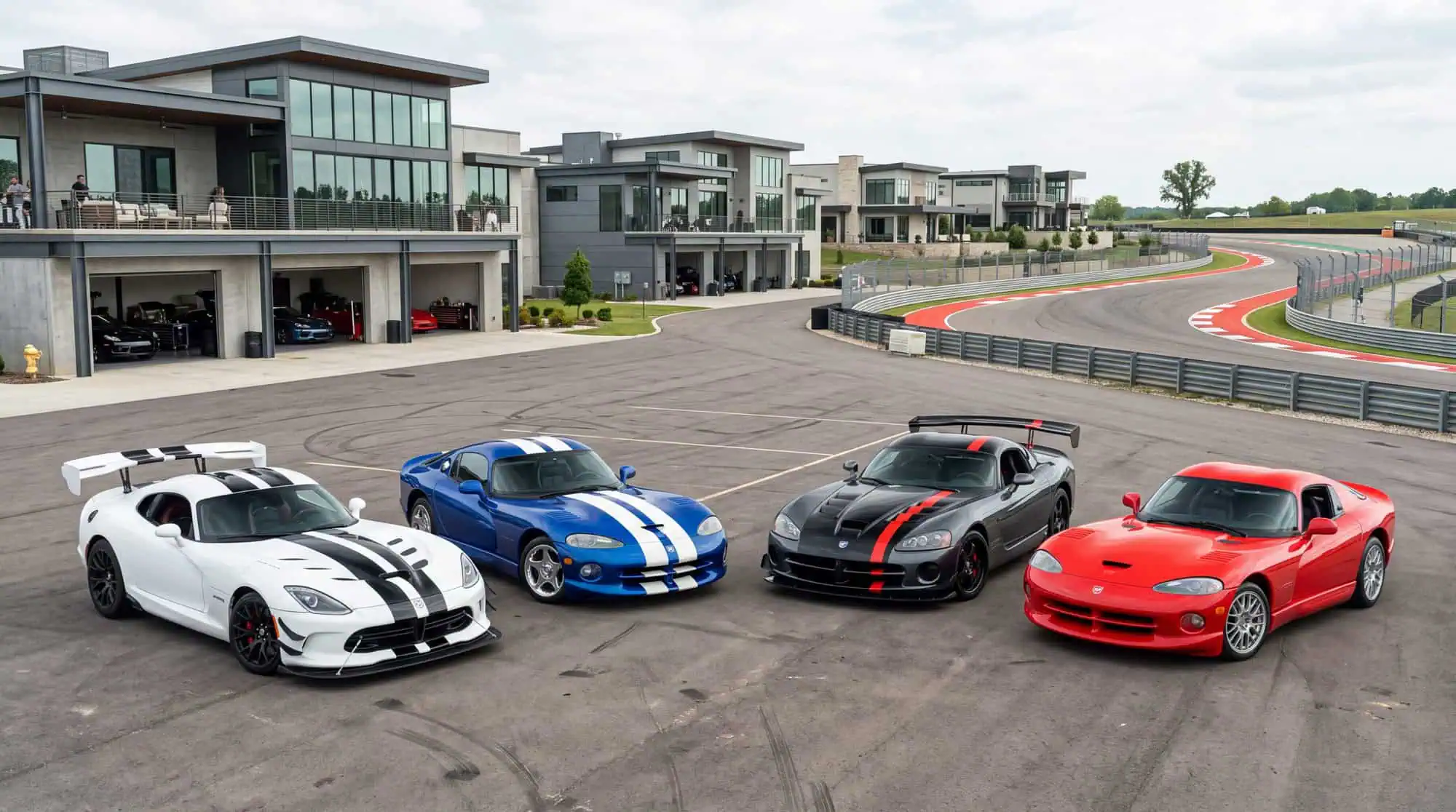
A red Dodge Viper RT/10 with side pipes and removable windows. A blue-and-white GTS with a double-bubble roof. An ACR with a rear wing you can see from halfway across a parking lot. They’re all Dodge Vipers, but they ask very different things of their owners.
Across five generations, every production street Viper paired a naturally aspirated V10 with a six-speed manual and rear-wheel drive. Once you turn the key, the details start to matter. How hot does the cabin get? How do the brakes and chassis behave? What did the last owner do at the track, and what will it cost to replace a damaged hood or a missing aero piece? Here’s how to choose the right Viper and what to check before you buy.
Dodge Viper generations at a glance
| Generation | U.S. model years | Engine and factory horsepower | Street models and major performance variants |
|---|---|---|---|
| Gen I (SR I) | 1992–1995 | 8.0L V10, 400 hp | RT/10 roadster |
| Gen II (SR II) | 1996–2002, including the transitional 1996 RT/10 | 8.0L V10, 415–460 hp | RT/10, GTS, GTS ACR, GT2 Championship Edition |
| Gen III (ZB I) | 2003–2006 | 8.3L V10, 500–510 hp | SRT-10 convertible, SRT-10 coupe |
| Gen IV (ZB II) | 2008–2010 | 8.4L V10, 600 hp | SRT-10 convertible, SRT-10 coupe, ACR coupe, dealer-program ACR roadster |
| Gen V (VX I) | 2013–2017 | 8.4L V10, 640 hp for 2013–2014 and 645 hp for 2015–2017 | SRT, GT, GTC, GTS, ACR, plus Time Attack and Extreme Aero packages |
The dates are model years. There were no production street Vipers for model years 2007, 2011, or 2012. The guide covers the U.S. street-car lineup, including factory performance packages and the named limited editions most likely to appear in listings. Dealer commissions and club cars can have their own documentation.
Gen I | 1992–1995 Dodge Viper RT/10
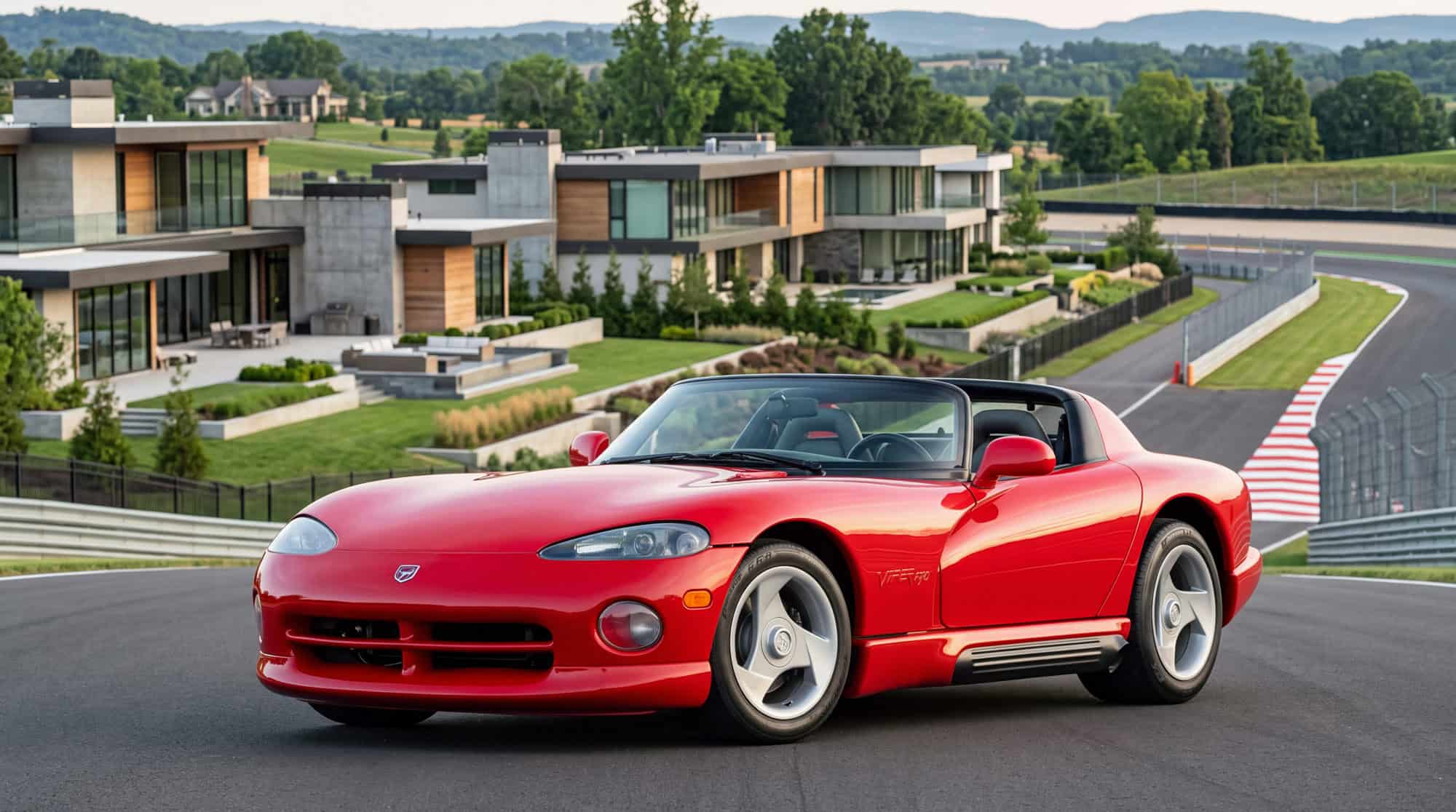
The original RT/10 is the Viper at its simplest. It has side-exit exhaust, removable side curtains and a removable soft top. It also predates ABS, traction control, stability control and airbags. A 1992 launch-year car is the collector pick. A 1994 or 1995 with working air conditioning and complete weather gear is easier to enjoy regularly.
Best part. The low seating position, side pipes and open cockpit deliver an experience unique to the early car. Even a short drive feels like an occasion.
Biggest drawback. Little weather protection, hot sills and aging model-specific parts. The original clamshell hood is particularly expensive to replace.
What to look for. Ask for a genuinely cold start and records of any head-gasket or engine work. Have the shop check for coolant seepage, signs of overheating, blue smoke and oil consumption, particularly on 1992–1993 cars. Look for heat damage or corrosion at the side sills and cracks or repairs around the hood and front fascia. Have the seller install the top and side curtains so you can verify that their hardware is complete and the pieces fit.
Gen II | 1996–2002 Dodge Viper RT/10, GTS, GT2 and ACR
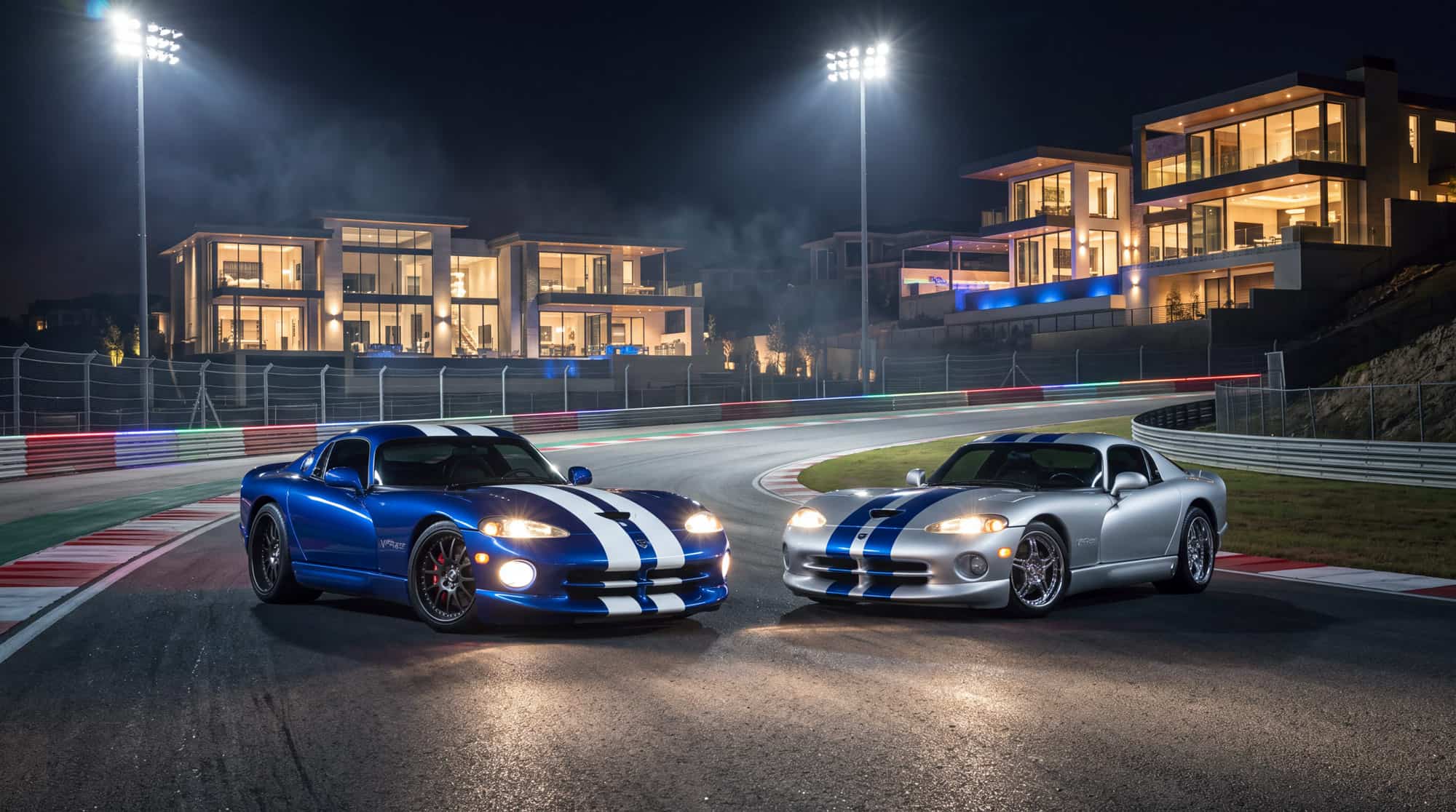
The GTS made the Viper a proper closed-roof sports car, with a usable hatch, roll-up windows and the double-bubble roof. The RT/10 carried on alongside it. This is the generation to shop if the shape you want is the blue-and-white Viper you remember from the ’90s.
| Model or edition | What you’re buying |
|---|---|
| 1996 RT/10 | A transitional 415-hp roadster, often called Gen 1.5, with rear-exit exhaust and several early-car features. The 1996 GTS already had 450 hp. |
| 1997–2002 RT/10 | The later 450-hp open car. A 2001–2002 example adds factory ABS, also standard on the GTS for those years. |
| 1996–2002 GTS | The 450-hp fixed-roof coupe. The 1996 blue-and-white launch specification is the signature look. |
| 1998 GT2 Championship Edition | A 460-hp, white-and-blue street coupe with distinctive aero, also called the GTS-R Commemorative Edition. Verify the numbered build and factory paperwork. |
| 1999–2002 GTS ACR | A 460-hp GTS with track-oriented suspension, lightweight BBS wheels and a pared-down specification. Check which comfort equipment it left the factory with. |
| 2002 Final Edition | Red with white stripes and a numbered plaque. Dodge built Final Edition coupes in both GTS and ACR configurations. |
Best part. The standard GTS delivers the classic Viper shape, more usable cabin and the same big-displacement character as the roadster. A 2001–2002 GTS is the best fit here for someone who plans to put miles on the car and wants ABS.
Biggest drawback. There’s no traction or stability control, and pre-2001 cars also lack ABS. Earlier cars need particular attention to chassis campaign history, while ACR suspension and wheels are costly to put right if they’re damaged or missing.
What to look for. Have a Viper specialist inspect the frame near the steering rack, the rear suspension mounting areas and the quality of any earlier campaign work. Check the power-steering pump pulley and bracket, door hinges, rear hatch seals and clamshell hood. For an ACR, verify the dampers and wheels against the build paperwork. The switch from forged to hypereutectic pistons for 2000 is especially relevant to a modified car. Ask who built and tuned the engine and request invoices.
Gen III | 2003–2006 Dodge Viper SRT-10
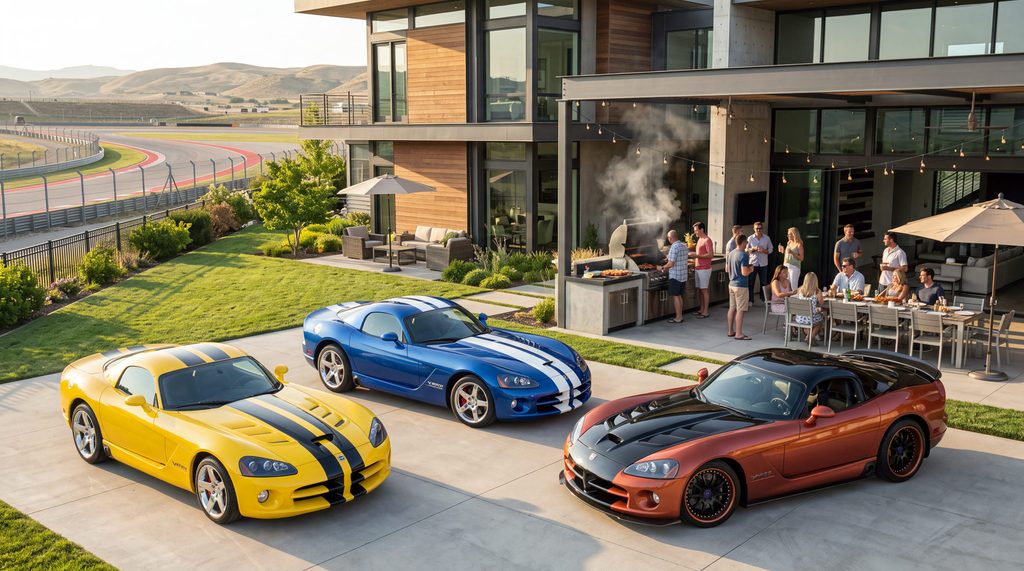
The 8.3-liter SRT-10 debuted as a 500-hp convertible with a folding soft top, conventional windows and ABS. The fixed-roof coupe arrived for 2006, when Dodge’s factory specifications listed 510 hp. This is a good starting point for a shopper who wants a V10 and a manual with a roof they can use in changing weather.
- SRT-10 convertible (2003–2006). The open car and the easiest Gen III to find. The limited runs include the 2004–2005 Mamba, with distinctive red-and-black interior trim, and the 2005 Commemorative Edition, Copperhead Edition and Viper Club of America (VCA) Special Edition.
- SRT-10 coupe (2006). A one-model-year body style for this generation. Look for the blue-and-white First Edition, the white-and-blue VOI.9 (Viper Owners Invitational) coupe, the VCA Edition and the Copperhead Edition coupe. Confirm the original build before paying extra for a color or stripe pattern.
Best part. The convertible gives you the full open-air experience with a usable top. The 2006 coupe brings back the double-bubble roof and hatch in a newer chassis.
Biggest drawback. Heat from the exhaust can make slow summer driving uncomfortable, particularly in earlier cars. The car has ABS, while traction and stability control would have to wait until Gen V.
What to look for. Cycle the convertible top and inspect its latches, drains, seals and fabric. On either body style, check the side sills and front fascia for heat and scrape damage, look for leaks at the oil cooler lines, and test the clutch and gearbox after warm-up. On a track-driven example, ask for oil service history and documentation of any oiling upgrades. On a 2003–2004 car, ask a dealer to confirm the status of VIN-specific airbag campaigns.
Gen IV | 2008–2010 Dodge Viper SRT-10 and ACR
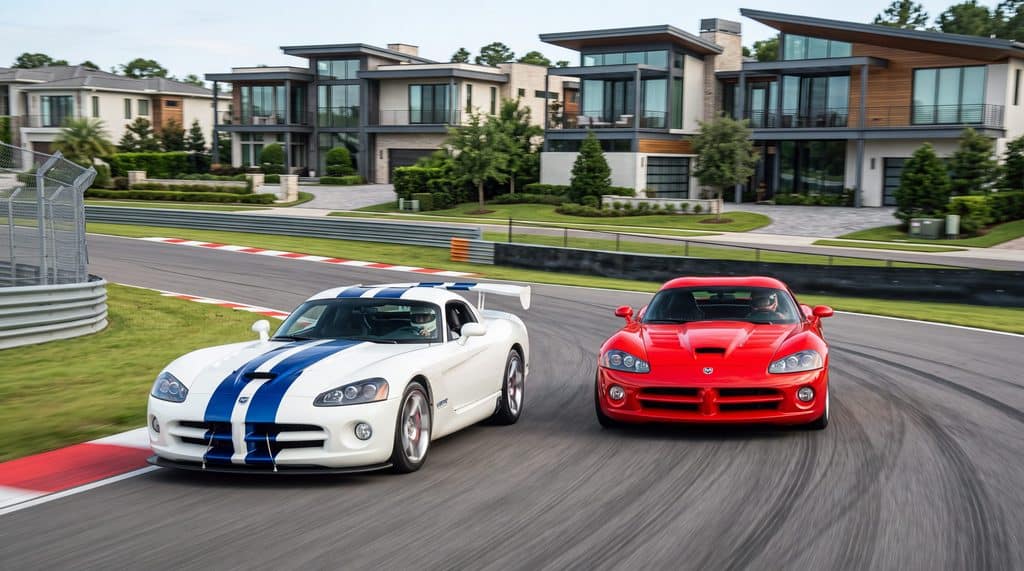
The 8.4-liter V10 made 600 hp, and Dodge offered both a convertible and a coupe. This is the last Viper generation without electronic stability control, which gives the standard car and the track-focused ACR a distinct character.
| Model or package | What you’re buying |
|---|---|
| SRT-10 convertible | Open-top Gen IV with 600 hp and a folding soft top. |
| SRT-10 coupe | The fixed-roof 600-hp car. A standard coupe is the better Gen IV choice for regular road use if you prefer simpler aero and fewer clearance concerns. |
| SRT-10 ACR coupe | The same 600-hp rating with adjustable suspension and functional front and rear aero. The optional Hard Core package deleted equipment to save weight. |
| SRT-10 ACR roadster | A limited 2010 dealer-program car developed with Woodhouse Dodge. Its factory-backed origin makes the original invoice especially valuable. |
The standard convertible and coupe could also be ordered with the Aero Appearance Group, so a factory wing alone doesn’t prove a car is an ACR. The 2010 cars also received a shorter fifth gear. Look for the 2009 VOI.10 Edition and the 2010 1:33 Edition ACR, VooDoo Edition ACR, Snakeskin Green Special Edition ACR and Final Edition, the last of which was offered as a coupe, roadster or ACR. Other documented 2010 runs include the Canada Final Edition, the Tomball Reverse ACR and the Roanoke black coupe with Plum Crazy stripes. The 640-hp ACR-X was a factory track-only car. The earlier Viper Competition Coupe was also a dedicated race car. Check title and intended use early if either turns up in a search for a street Viper.
Best part. The standard coupe delivers most of the Gen IV appeal with fewer low-clearance parts to worry about. The ACR adds a chassis and aero package with a genuine club-track purpose.
Biggest drawback. The ACR’s splitter and suspension make driveways and rough roads more work. Replacement aero and adjustable dampers can make a rough example expensive quickly.
What to look for. Inspect the underside of the splitter, rear wing mounts, damper bodies, chassis lift points and inner tire shoulders. Ask whether the car has been lowered, corner-balanced or set up for track alignment. A car that’s seen track time can still be a good buy with service logs, documented fluid changes, and a clean specialist inspection. Ask the shop to investigate driveline vibration, fluid leaks and any unstable oil pressure readings.
Gen V | 2013–2017 SRT and Dodge Viper

Sold under the SRT brand in 2013–2014 and the Dodge brand from 2015, every fifth-generation Viper was a coupe. This generation added electronic traction and stability control, a more finished cabin and 640 hp at launch. Output rose to 645 hp for 2015.
| Model or package | What you’re buying |
|---|---|
| SRT (2013–2017) | The base coupe and the simplest way into Gen V. Early options included the Grand Touring Package and Track Package. |
| GT (2015–2016) | The middle trim, with two-mode dampers, five-mode stability control and upgraded cabin materials. |
| GTC (2015–2017) | The basis for the 1 of 1 factory customization program. Equipment varies widely, from street-focused builds to cars ordered with ACR hardware. Get the build sheet. |
| GTS (2013–2017) | The premium road-oriented Viper, with driver-selectable suspension and more cabin amenities. The one to start with if you plan to drive longer distances. |
| TA / TA 1.0 and TA 2.0 | The original factory Time Attack debuted for 2014. The revised TA 2.0 arrived for 2015 with more aero, including a larger rear wing. Later order guides also show TA and Time Attack option groups. Verify the factory option codes before comparing a serialized edition with an optioned car. |
| ACR (2016–2017) | The flagship track model, with adjustable Bilstein dampers, carbon-ceramic brakes and track-focused aero. The optional Extreme Aero Package adds a larger dual-element wing and additional carbon-fiber pieces. |
The 2013 GTS Launch Edition revived the blue-and-white coupe livery. The 2014 GTS Anodized Carbon Special Edition paired a matte metallic finish with unique trim, and some examples received Time Attack hardware. The 2017 final-year lineup included the 1:28 Edition ACR, GTS-R Commemorative Edition ACR, VoooDoo II Edition ACR, Snakeskin Edition GTC, Dodge Dealer Edition ACR and the later-added Snakeskin ACR Edition. The Snakeskin GTC and Snakeskin ACR are distinct editions.
Best part. The GTS is the easiest Viper here to live with on longer road drives. The ACR is the standout if you’ll use its aero, suspension and brakes at the track.
Biggest drawback. Carbon-ceramic brakes, carbon aero and special finishes make condition particularly important. On an ACR, even a car with very few miles can have expensive wear from track sessions or damage from loading onto a trailer.
What to look for. For 2013–2014 cars, ask a Dodge dealer to check the VIN for FCA customer satisfaction notifications R28/R29 for oil contamination and consumption. Request the actual work orders, especially if the engine was replaced, and ask about door-latch recall completion. On any Gen V, review oil top-up and service history, test the electronics and selectable dampers where fitted, and have a specialist inspect carbon-ceramic rotors and aero components on ACRs. Confirm that the splitter extension, hood louvers and other removable pieces specified for the car are present. On a custom or limited edition, verify paint codes and look for evidence of prior refinishing.
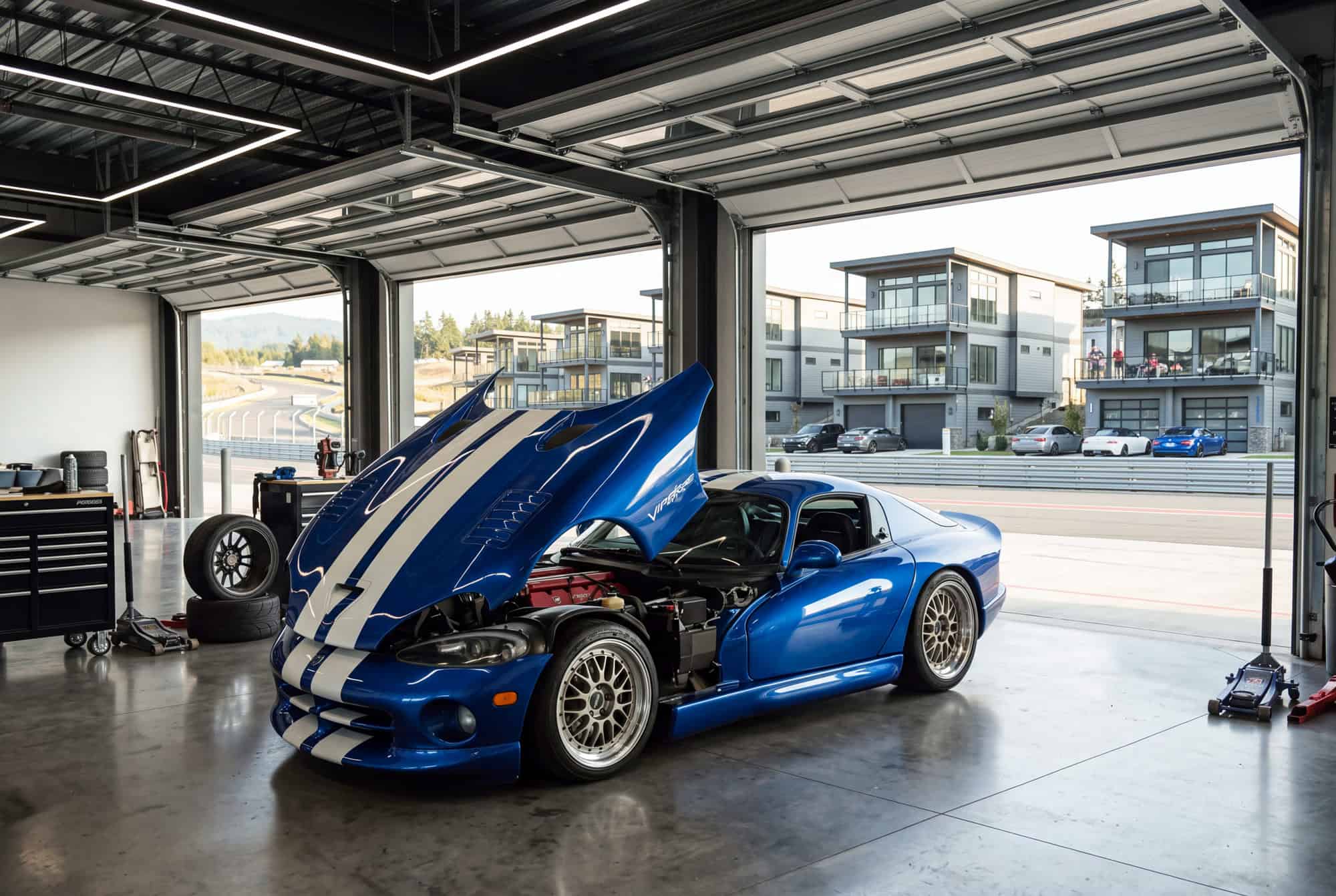
What to check before buying any Dodge Viper
- Start with the VIN and paperwork. Match the title and VIN, then ask for the window sticker, factory build sheet and maintenance invoices. For special editions, check the serialized plaque and supporting records. Paint, stripes and a wing can be added later.
- Get the car on a lift. Hire a shop familiar with Vipers to inspect the frame, suspension mounts, underbody, hood, sills and panel gaps. Ask the shop to distinguish ordinary scuffs from signs of structural repair. If it finds damage, get a parts and labor estimate before agreeing to a price.
- See it start cold and drive it warm. Check for smoke, leaks and abnormal noise. Once warm, watch temperatures and oil pressure and check clutch operation, gearbox engagement, steering and braking. Ask your inspector whether compression and leak-down testing is warranted, especially for a modified car or one with an unclear oil history.
- Read the tire date codes. A low-mileage Viper can still be sitting on old rubber. Confirm the correct sizes, inspect the inner shoulders and check replacement availability before you buy. Include tires and overdue fluids in your first-year budget.
- Check recalls and service campaigns by VIN. Use NHTSA and Mopar and ask a Dodge dealer for campaign history, particularly on older cars. NHTSA’s VIN results may omit older recalls and manufacturer service campaigns.
Which Dodge Viper should you buy?
| If you want… | Start with… |
|---|---|
| The original roadster experience | A 1994–1995 RT/10 with complete weather gear. Shop 1992 if launch-year provenance is what you want. |
| The classic Viper coupe | A 1996 blue-and-white GTS for its iconic specification, or a 2001–2002 GTS if you plan to drive it often and want ABS. |
| An open car you’ll drive regularly | An SRT-10 convertible with a sound top and thorough records. Start with Gen III and cross-shop Gen IV if you want 600 hp. |
| A 600-hp coupe for weekend drives | A standard 2008–2010 SRT-10 coupe. |
| A Viper for longer road trips | A Gen V GTS. Cross-shop the 2015–2016 GT if you want adjustable dampers with a simpler cabin. |
| A factory track-focused Viper | A Gen IV ACR or Gen V ACR. Look for a TA if you want a track-oriented Gen V with less aggressive aero than an Extreme Aero ACR. |
Compare completed sales for the same generation, body style and package, then account for mileage, originality and service history. A documented GTS or SRT-10 with a clean inspection, fresh tires and recent service can offer more driving enjoyment per dollar than a limited edition that needs paint, brakes and suspension work.
Finance your Dodge Viper with Woodside Credit
Woodside Credit finances eligible Dodge Vipers from all five generations, whether you’re buying from a dealer, a private seller or at auction. If you’ve narrowed the search to an RT/10, a GTS or an ACR, get a Quick Quote to estimate your monthly payment before you make an offer. Explore Dodge Viper financing · Get a Quick Quote