


A Mazda RX-7 FD can look immaculate, sound healthy on a cold start, and still need a rotary rebuild. It can also have a rebuilt engine, a six-figure odometer, and years of good driving ahead. Before paying a premium for low mileage, a rare trim, or an original paint color, get a warm rotary compression test with all six readings. Then find out how well the rest of the car has been cared for.
The FD is Mazda’s third-generation RX-7. It debuted in Japan in December 1991 and ran through 2002, while Mazda sold it new in the U.S. for the 1993–1995 model years. Its appeal is easy to understand from the driver’s seat. The compact rotary sits low and far back, the steering feels quick, and roughly 2,800 pounds give the car a lightness that a spec sheet alone can’t explain.
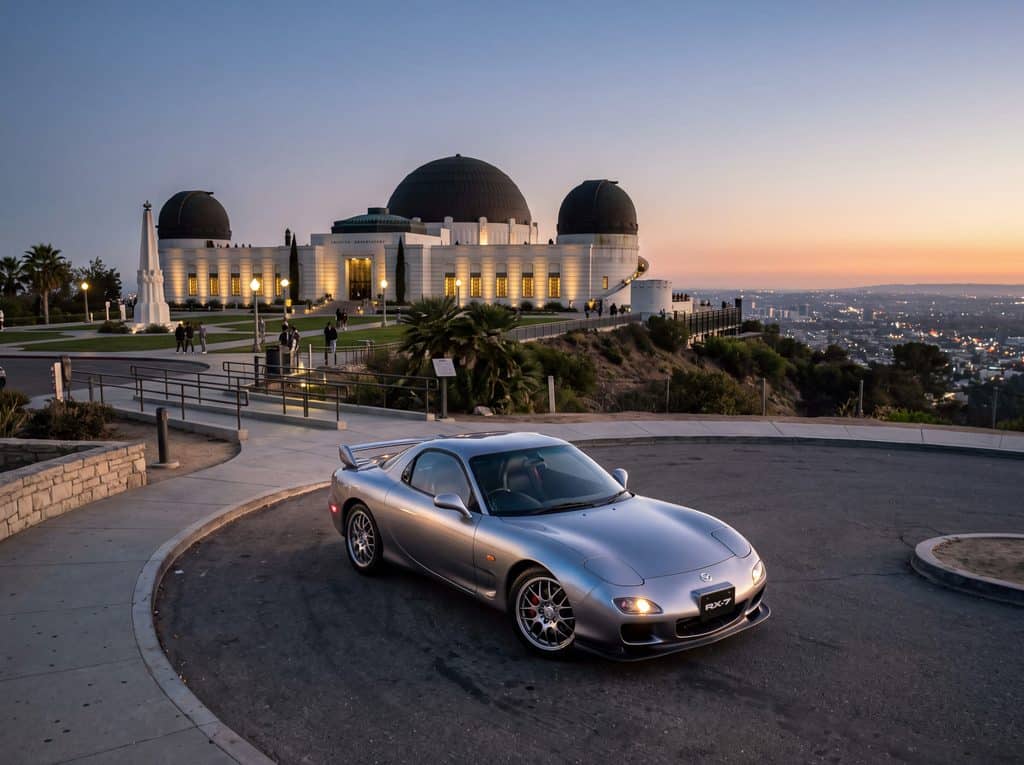
Mazda RX-7 FD specs at a glance
| Specification | What to know |
|---|---|
| Engine | 1,308 cc Mazda 13B-REW two-rotor engine with intercooled sequential twin turbos |
| U.S. output | 255 hp and 217 lb-ft of torque |
| Japanese-market output | 255, 265, or 280 PS, depending on year, grade, and transmission |
| Layout | Front-engine, rear-wheel-drive hatchback coupe with a limited-slip differential in U.S. specification |
| Transmission | Five-speed manual or four-speed automatic, depending on grade |
| Suspension | Independent double wishbones front and rear |
| U.S. curb weight | 2,789 lb for the 1993 manual in Mazda’s brochure |
| U.S. brakes and wheels | Four-wheel ventilated discs with ABS and 16-inch alloys |
U.S. trims and packages
| Model or package | Why buy it | What to verify |
|---|---|---|
| Base, 1993–1995 | The simplest route into a U.S.-market FD. A clean five-speed makes an excellent weekend car. | Check for an automatic-to-manual conversion, added aero, and any options that affect value. |
| Touring, early U.S. cars | More comfort and convenience, with leather, sunroof, fog lights, rear wiper, and Bose Acoustic Wave audio. | Test the sunroof and audio. Check for dampness around the hatch and ask whether the Bose hardware is still present. |
| Popular Equipment Package (PEP), later U.S. cars | Typically combines the sunroof and leather with a simpler audio setup. | Confirm the package through original paperwork and equipment. Sellers sometimes use “Touring” as a catchall. |
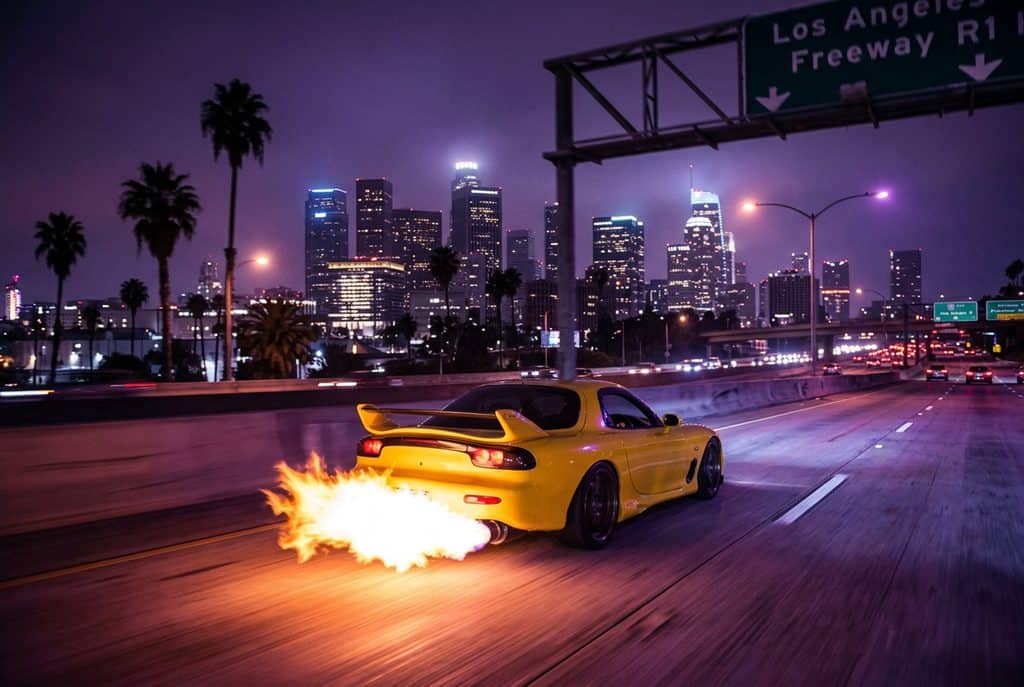
| R1, 1993 | The firmest early U.S. setup, with sport suspension, a front strut brace, dual oil coolers, and front and rear aero. Competition Yellow Mica is an especially desirable factory color. | Verify the original package and paint. A wing and front lip are easy to add. Inspect both oil coolers and their lines. |
| R2, 1994–1995 | The follow-up to the R1, with a more compliant sport suspension tune and similar performance equipment. | Ask for the window sticker or factory documentation and check for missing or replaced package hardware. |
All U.S. packages shared the 255-hp rating. The R1 and R2 appeal comes from how Mazda equipped them and how they drive.
Japanese-market FDs and special editions
If you’re open to right-hand drive, Japan offers a wider range. Many early cars wear Efini badging. You’ll see sellers refer to Series 6, 7, and 8, but the actual build date, chassis number, and factory grade tell you more than the bumper or taillights. Later-style bodywork is a popular retrofit.
| Period | Grades you’ll see | What matters when shopping |
|---|---|---|
| 1991–1995, Series 6 | Type S, Type X, Type R, plus later R-II, RZ, and Touring variants | Early Japanese cars started at 255 PS. Look up the equipment using the car’s production date, particularly for two-seat and limited-edition versions. |
| 1996–1998, Series 7 | Type RB, Type RS, Type RZ, and the anniversary Type RS-R, among others | Select versions reached 265 PS. Check that the brakes, suspension, and wheels correspond to the grade and build date. |
| 1999–2002, Series 8 | Type RB, Type R, Type RS, Type RZ, Bathurst editions, and Spirit R | The late facelift brought larger front openings. Type R and RS reached 280 PS, while the 1999 RB was rated at 265 PS with the manual and 255 PS with the automatic. |
| 2001-on Bathurst editions | Type R Bathurst R and Type R Bathurst | These were separate factory releases. The limited Bathurst R came first. Both had factory height-adjustable dampers, so ask what remains on the car. |
Mazda announced 1,500 Spirit Rs across three versions for Japan in 2002. Type A paired two seats and lightweight Recaro buckets with a five-speed manual and 280 PS. Type B was the 280-PS manual with rear seats. Type C had rear seats, a four-speed automatic, and 255 PS. All three came with 17-inch BBS wheels. Types A and B also had Bilstein dampers and larger drilled brakes. At Spirit R prices, verify the chassis and original equipment before paying for the badge.
What to look for when buying an FD RX-7
1. Get all six rotary compression readings
Book a pre-purchase inspection with a shop that regularly works on the 13B-REW. Ask for a warm rotary compression test with three readings per rotor, plus the measured cranking speed and values corrected to 250 rpm. Ask whether the shop needs to account for altitude. A single peak reading per rotor can hide a weak chamber.
Have the shop interpret the absolute pressures, the spread between faces on each rotor, and the difference between the two rotors. A big spread deserves attention even when one number looks strong. If results point to internal wear, get a written, installed rebuild estimate before agreeing on price.
2. See a cold start and a fully warm restart
Ask the seller to leave the car cold before you arrive. Listen for prolonged cranking and watch for stumbling or smoke that persists after warm-up. Then bring the car up to temperature, shut it down for a few minutes, and restart it. A reluctant hot restart calls for diagnosis. Compression, ignition, battery or starter performance, and fueling are all worth checking. Persistent white exhaust vapor with a sweet smell or unexplained coolant loss warrants a check for internal coolant leakage.
3. Inspect the cooling, ignition, and fuel systems
Ask the shop to pressure-test the cooling system and inspect the radiator, fans, hoses, and air-separator tank. Original plastic tanks can crack with age. Look for dried coolant residue and ask directly about past overheating or repeated top-offs. An aluminum radiator is a useful piece of history when an invoice shows who fitted it and why.
Have the shop check the plugs, ignition leads and coils, fuel hoses, and oil cooler lines for deterioration or leaks. Ask how often the owner checked the oil level and whether the factory oil-metering pump still operates. If it was deleted, have the shop verify how the build handles rotor lubrication.
4. Make sure the second turbo comes in smoothly
On a stock FD, the first turbo builds boost at lower engine speeds and the second joins under load around the midrange. Once the engine is warm, have the specialist check the handoff during a controlled drive. A flat spot, abrupt loss of boost, surging, or misfire deserves diagnosis. Heat ages the vacuum hoses, solenoids, and actuators that control the switchover, so a boost problem can be in the controls as well as the turbos.
5. Get the receipts behind “fresh rebuild” and “single turbo”
For a rebuilt engine, ask for the builder’s name, the invoice, mileage since installation, which housings and irons were replaced or reused, and a recent compression report. Ask why the original engine failed and what the shop did to address the cause. A documented rebuild by a rotary specialist can make a car a stronger candidate.
For a single-turbo conversion, identify the turbo, ECU, injectors, fuel pump, and tuner. Ask for the calibration or build records and have the shop verify boost control, fueling, cooling, and wiring. Check emissions and registration requirements where you live before committing, particularly if emissions equipment has been removed. For a first FD, a stock or lightly modified car with service records is usually the easiest starting point.
6. Put the car on a lift
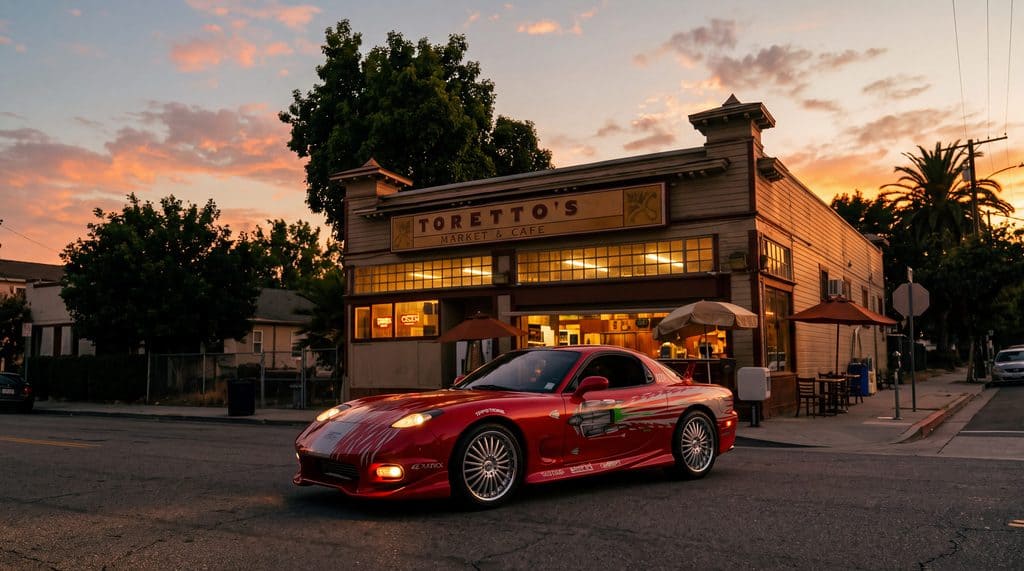
Have the shop inspect the front chassis rails, suspension towers, rocker panels, jacking points, rear wheel arches, floor, and spare-wheel well. Look for crushed rails, creased metal, inconsistent seams, and fresh undercoating that could conceal corrosion or repairs. Check for moisture around the hatch and wing mounts.
Uneven panel gaps and overspray can justify a closer look, especially on a car with a later-style nose or a widebody kit. Ask for repair photos and alignment records if the seller discloses an accident. Structural rust or poorly repaired crash damage can be harder to sort out than a documented mechanical issue.
7. Drive it and test the equipment you’ll use
On a manual, shift through all five gears and pay attention to any crunch or resistance, including the fourth-to-fifth shift. Check for clutch slip, driveline clunks, and vibration on and off throttle. On an automatic, check how it engages Drive and Reverse and how it shifts once warm. Have the shop inspect the bushings, dampers, steering rack, mounts, and Mazda’s Power Plant Frame, which connects the transmission to the differential.
Check tire date codes and tread wear. The car should track straight and brake without pulling. Cycle both pop-up headlights and test the air conditioning, windows, warning lights, sunroof, and hatch struts. Original trim, switches, and special-edition parts can be harder to replace than they look.
Buying a JDM RX-7 in the United States
The federal 25-year NHTSA exemption is based on the individual car’s manufacture date. A 2002 Spirit R generally reaches that threshold in 2027, on its own build anniversary. The EPA has a separate age-based provision for vehicles at least 21 years old in their original, unmodified configuration, with specific rules for replacement engines. State titling and emissions requirements are separate. If you’re registering in California, confirm the direct-import requirements with the DMV before placing a deposit, even if the seller already has an out-of-state title.
On a car that’s already here, match the stamped chassis number to the U.S. title and import records. Ask for the Japanese export certificate and translation, federal declarations, and proof of customs entry. An auction sheet and service records can help substantiate the mileage. Check whether the odometer reads in kilometers and whether the cluster has been changed.
Which FD is the best buy?
- For a first FD: Look for a U.S.-market Base or Touring five-speed with documented maintenance, a healthy compression report, and working factory twin turbos.
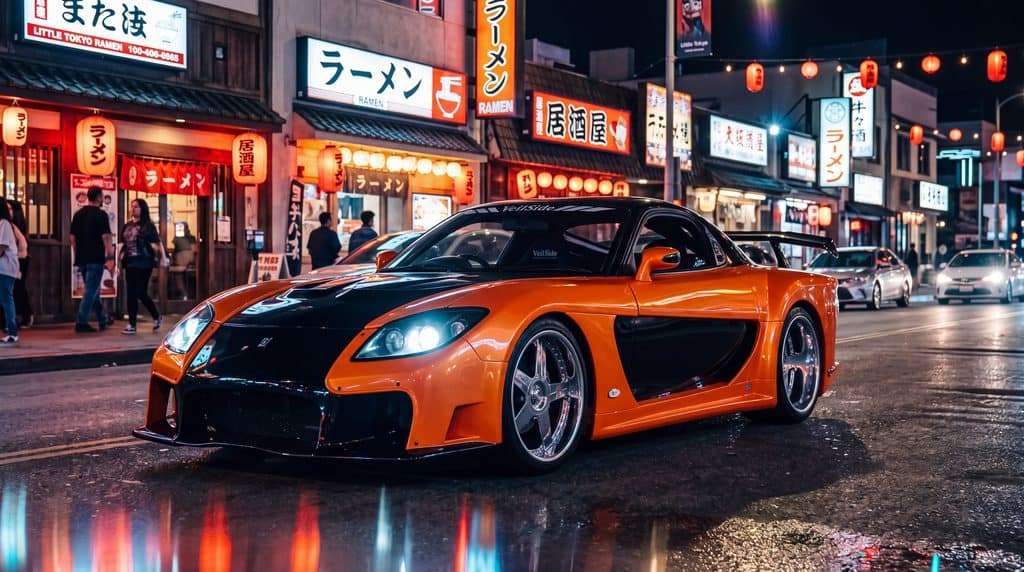
- For a factory performance model: Look for a verified R1 or R2 if you want left-hand drive, or a well-documented Japanese Type R or Type RS if you want a late-model FD.
- For a collection: Pay for provenance. The original paperwork, paint, drivetrain history, and trim-specific parts matter on a Spirit R, Type RZ, or rare U.S. R-package car.
- For a project: Start with the straightest shell and clearest title you can find. Price out the engine, fuel system, ECU, cooling, and labor before assuming a cheaper car will cost less.
Use recent completed sales for similar cars when setting your budget. Match the market, trim, transmission, originality, and title status. Set money aside for the inspection and immediate maintenance, including tires, fluids, hoses, and any deferred work the shop identifies.
If the seller declines an independent inspection, the title and chassis number don’t match, or the car shows signs of structural damage or repeated overheating, keep shopping. A straight, well-documented FD with six healthy compression readings is a better weekend companion than a rarer car with unanswered questions.

Financing your Mazda RX-7 with Woodside Credit
Found the Mazda RX7 FD you’ve been looking for? Woodside Credit specializes in collector car financing. If you’re looking at a JDM example, have the U.S. title and vehicle details handy so our team can review eligibility. Explore your estimated monthly payment with a no-obligation Quick Quote.