


Finding the right collector car might take months. Getting it home deserves more than a five-minute decision.
Whether you have purchased a vintage Porsche across the country, won a classic Mustang at auction, or need to send your Ferrari to a specialist, shipping is part of the ownership experience. The right transporter can help protect your car, preserve its condition, and make a long-distance purchase much easier.
But “car shipping” covers several very different services. An open trailer, an enclosed transporter, and a dedicated truck offer different levels of protection, flexibility, and cost.
Here is what to know before handing over the keys.
Understanding the Different Types of Collector Car Transport
1. Open Transport
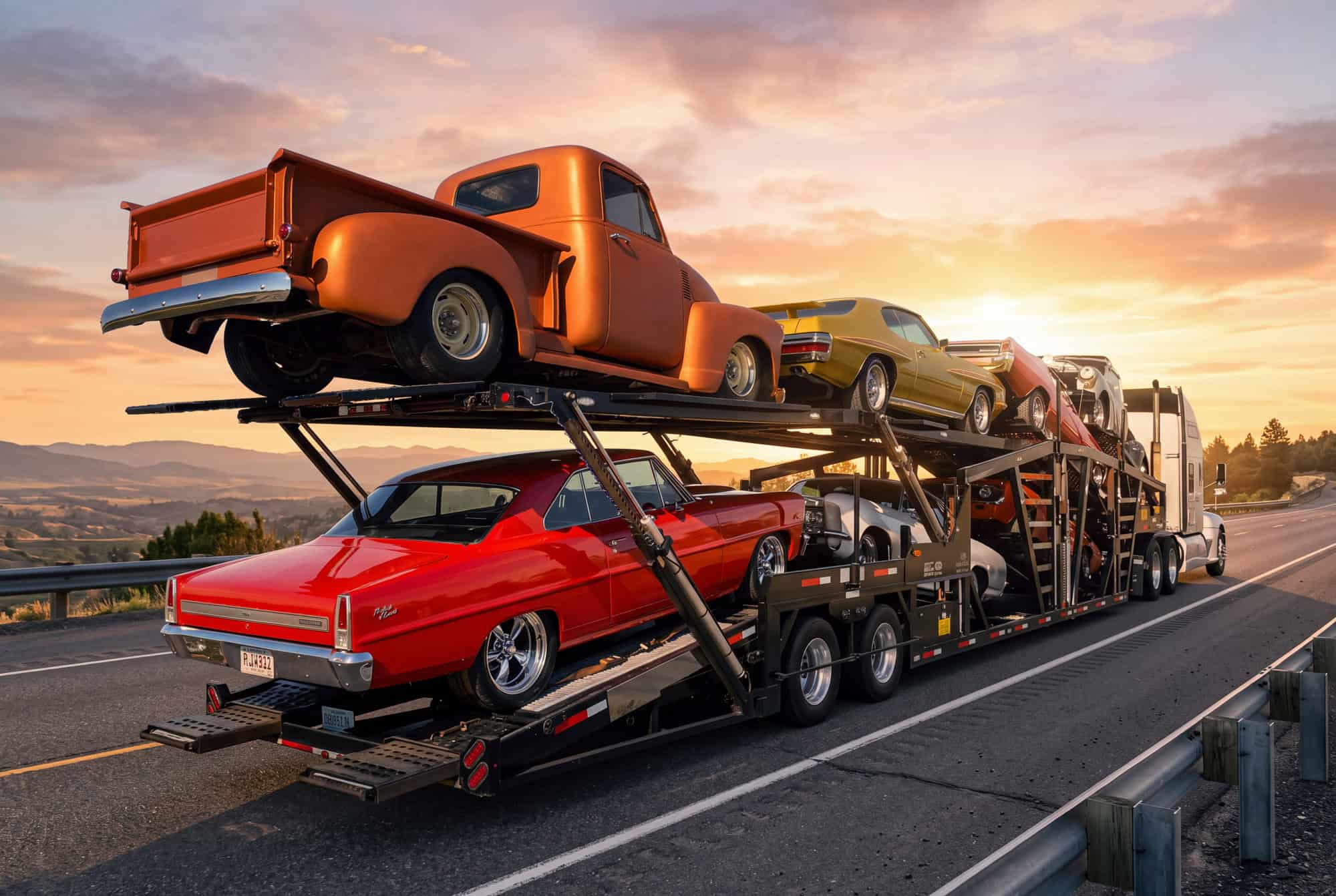
Open transport carries your vehicle on a trailer exposed to the outdoors—the familiar setup used to move many dealership vehicles.
Its main appeal is cost. However, your car remains exposed to weather, road grime, and debris during the trip. For a restored or high-value collector car, enclosed transportation provides greater protection. Woodside specifically recommends enclosed transport for these vehicles.
Consider it for: A driver-quality vehicle when you accept the exposure and have carefully evaluated the carrier.
A useful question: Would you feel comfortable leaving this car outside throughout the journey? If the answer is no, start with enclosed quotes.
2. Enclosed Transport
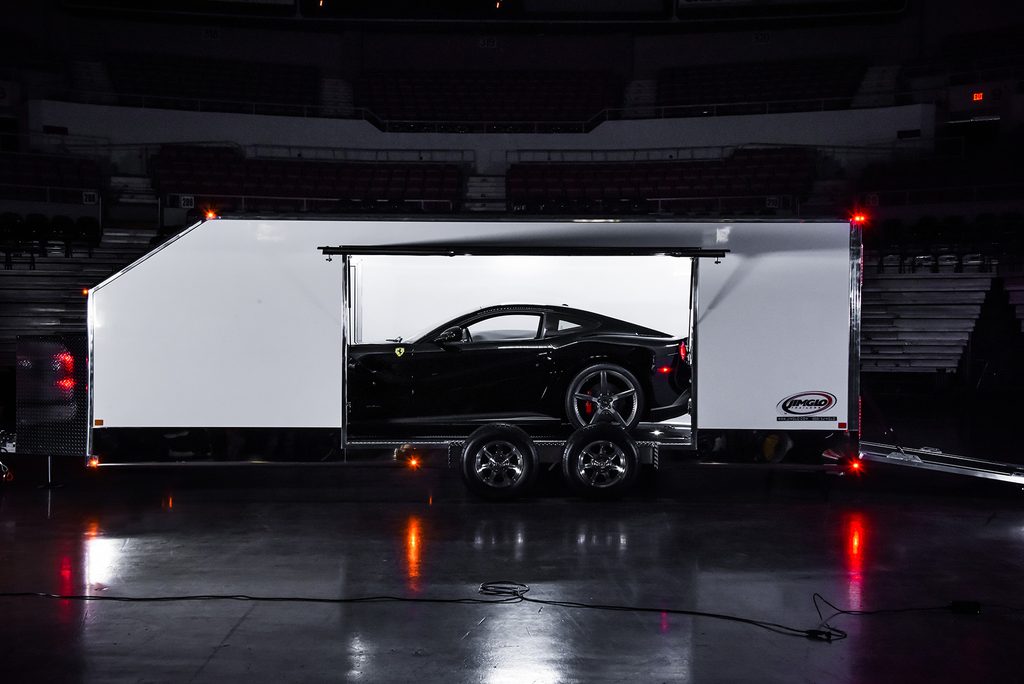
Enclosed transport places the car inside a covered trailer, shielding it from direct exposure to weather and road debris while providing greater privacy.
This is generally the starting point for restored classics, exotic cars, valuable original vehicles, and cars with exceptional paintwork. Collector-focused enclosed carriers may also offer specialized handling, interior protection, and equipment suited to unusual vehicles. Confirm what the specific service includes.
When comparing quotes, ask whether the trailer has rigid walls or flexible curtain sides. Request equipment photos if the description is unclear, and ask how the trailer closes and protects the vehicle.
Consider it for: Collector cars whose condition, rarity, or replacement difficulty justifies added protection.
3. Shared Enclosed Transport
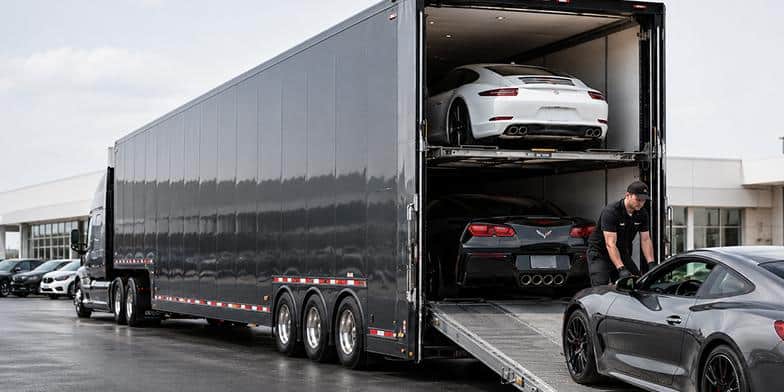
With shared service, your car travels alongside other customers’ vehicles.
This can offer a practical balance between enclosed protection and cost. However, scheduling depends on the carrier’s route and other pickups and deliveries. A booking does not necessarily mean the truck leaves immediately.
Ask whether your car will stay on the same trailer and whether other deliveries could require it to be unloaded and reloaded. Also distinguish an estimated delivery window from a written timing commitment.
Consider it for: A collector car purchase with some flexibility around arrival.
4. Dedicated Enclosed Transport

Dedicated service reserves a truck or trailer for your vehicle or collection rather than combining the shipment with unrelated customers’ cars.
Ask the provider to define “dedicated” in writing: Which truck will be used? Are transfers allowed? Is the journey direct? What pickup and delivery commitments are included?
Consider it for: A particularly valuable car, a collection move, or a shipment tied to a firm event schedule.
Dedicated service and enclosed service describe different things. One concerns who shares the shipment; the other concerns the trailer’s protection.
5. Liftgate-Equipped Transport
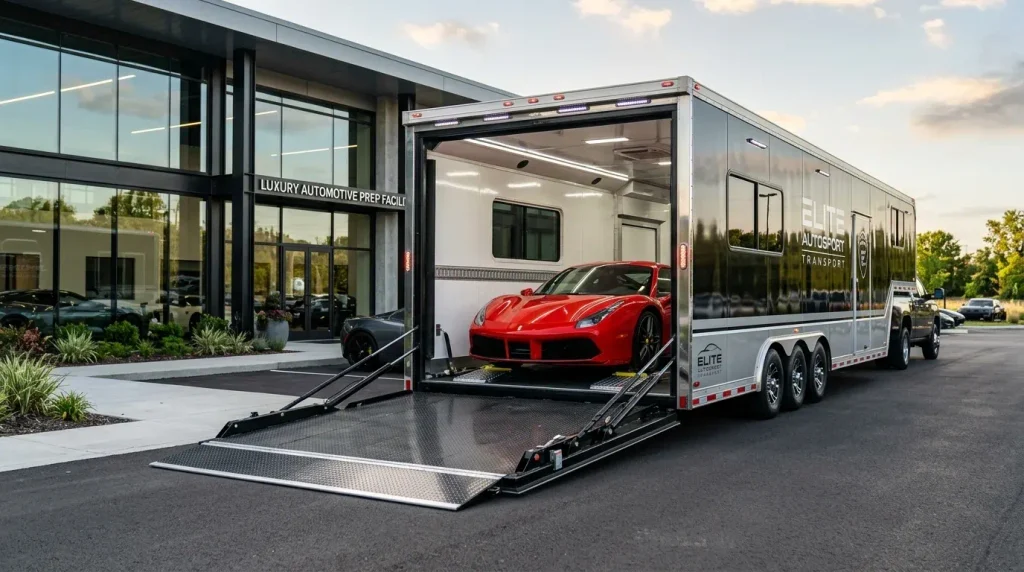
A hydraulic liftgate raises the car to the trailer’s loading level, helping address the approach-angle challenges that low vehicles can face on ramps. Specialized carriers use this equipment for exotic and collector vehicles.
For a lowered Porsche, long-wheelbase classic, or supercar with an expensive front splitter, loading equipment deserves as much attention as the trailer itself.
Provide the carrier with:
- Actual ground clearance.
- Front and rear overhang details.
- Vehicle width and height.
- Information about lowered suspension or aerodynamic additions.
- Instructions for any suspension-lift system.
Consider it for: Low-clearance cars and vehicles with vulnerable bodywork.
An enclosed quote does not automatically include liftgate loading.
6. Climate-Controlled Transport
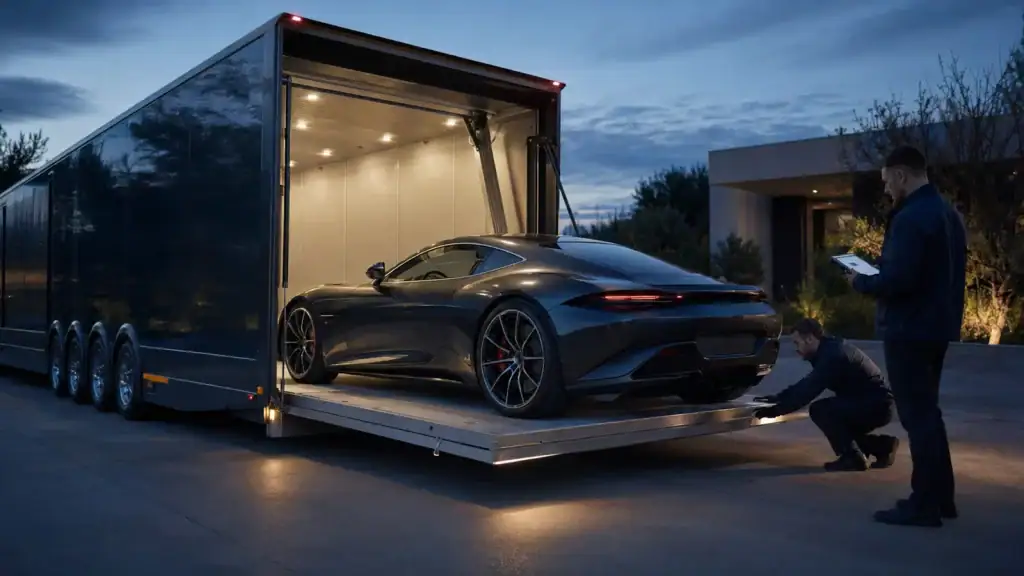
Enclosed does not necessarily mean temperature-controlled.
Some specialized transporters offer equipment designed to regulate temperature for heat- or cold-sensitive vehicles. If that matters for your car, ask about the operating temperature range and whether control continues during stops.
Consider it for: Vehicles with particularly sensitive materials or preservation requirements, following advice from a marque specialist.
7. International Shipping
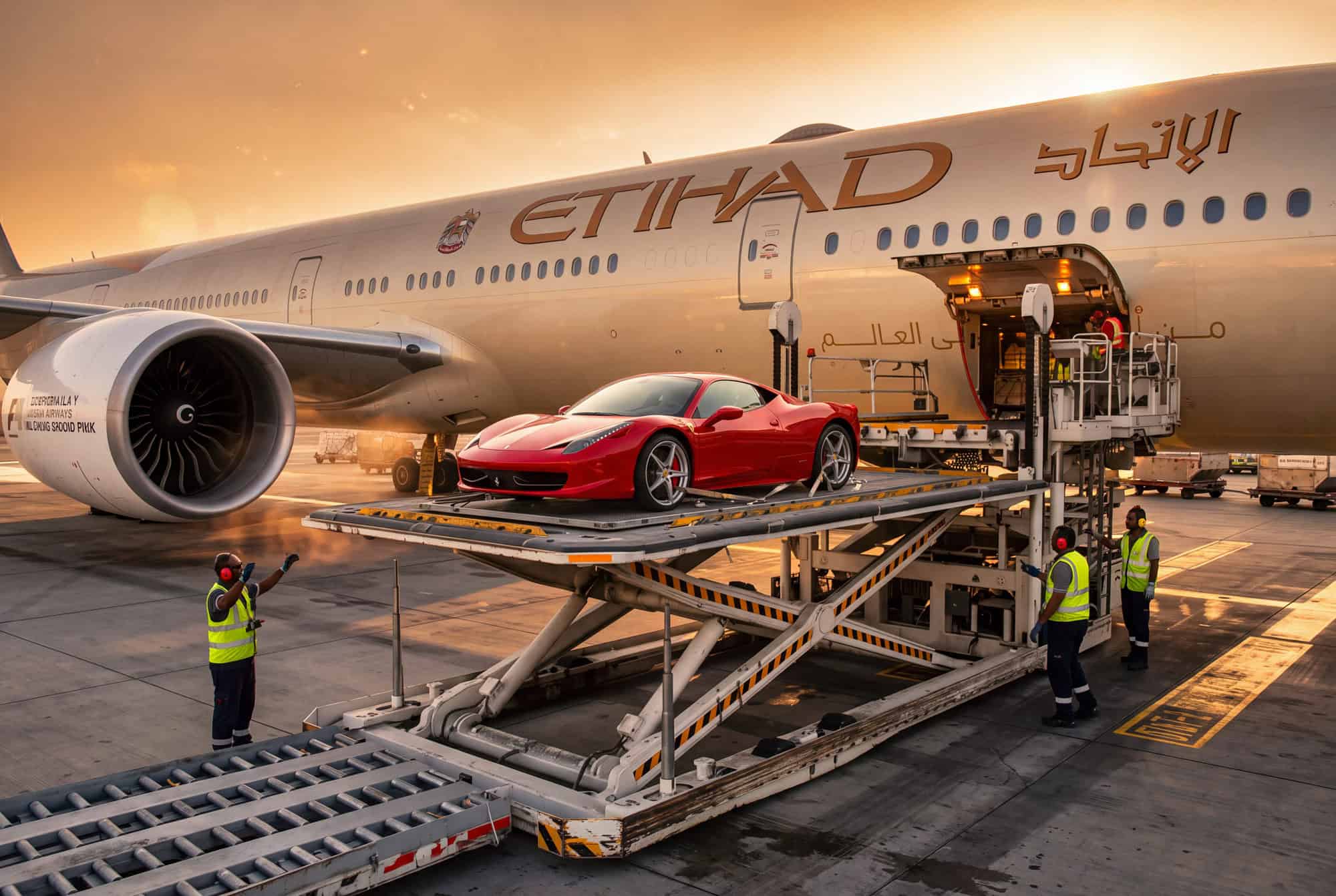
Overseas transport introduces three main options:
| Method | How it works | Main consideration |
|---|---|---|
| Shared container | Multiple vehicles share a shipping container | Cost is shared; departure can depend on consolidation |
| Sole-use container | A container is reserved for your shipment | Greater control at a higher cost |
| Roll-on/roll-off | Vehicles are driven aboard and off a vessel | Different handling and access arrangements from container shipping |
| Air freight | The vehicle travels by aircraft | Faster transportation at substantially higher cost |
A container service, roll-on/roll-off service, and air freight each involve different logistics. Confirm vehicle eligibility, required documents, destination charges, and restrictions before booking.
For an international purchase, have a qualified import/export specialist confirm the vehicle’s eligibility before you commit to the transaction.
Door-to-Door vs. Terminal-to-Terminal Shipping
These terms describe the collection and delivery arrangement.
Door-to-door service generally means collection and delivery as close to the requested addresses as the truck can legally and safely reach. Narrow streets, low branches, steep driveways, and local restrictions may require meeting nearby.
Terminal-to-terminal service uses designated facilities for drop-off or collection. Ask about indoor versus outdoor storage, security, access hours, and storage charges. Hagerty cautions that terminal arrangements can involve outdoor storage yards.
Agree on a suitable handoff location before pickup day.
Broker vs. Carrier: Know Who Is Moving Your Car
A carrier physically transports the vehicle. A broker arranges transportation with a carrier.
Both can play useful roles, but you should know which business you are hiring. FMCSA advises consumers to distinguish between the two and verify the registration of interstate auto transport brokers and carriers.
Before handing over your car, request the actual carrier’s legal name and identifying numbers. Check registration through FMCSA’s official systems, and confirm that the company arriving matches the approved arrangement.
Ask:
- Who will physically transport the vehicle?
- Will the shipment be subcontracted?
- Can the assigned carrier change?
- Who provides updates?
- Who handles a damage claim?
A recognizable booking website is only part of the picture. The company collecting your car matters just as much.
How Much Does Collector Car Shipping Cost?
There is no dependable universal price per mile.
The quote can change with the route, vehicle dimensions, operating condition, trailer type, scheduling requirements, and available capacity. Specialized equipment and unusual vehicles can also affect pricing.
For perspective, one transport provider’s published data reported a median enclosed price of $1,395 across 609 priced single-vehicle orders over a 12-month period ending in November 2026. That is one company’s shipment mix—not a nationwide average or a quote for your car.
The most useful comparison is several written quotes for the same service. Give every provider identical details and ask whether the total includes:
- Broker or booking fees.
- Fuel surcharges.
- Non-running vehicle handling.
- Oversize charges.
- Storage or waiting time.
- Additional parts.
- Cancellation charges.
- Any agreed timing commitment.
A lower number is less meaningful if the equipment, handling, or schedule differs.
How Long Does Shipping Take?
Separate the timeline into three stages: waiting for pickup, traveling after pickup, and arranging final delivery.
Ask when each stage begins. “Transit time” may exclude the days before a truck collects the car.
For an auction, show, or restoration appointment, build in a buffer and obtain any essential timing commitment in writing. International shipments require additional time for consolidation, sailing, and customs processing; the ocean crossing is only one part of the journey.
Insurance: Verify More Than “Fully Insured”
Insurance deserves a separate conversation before booking.
FMCSA’s requirements distinguish public liability insurance from cargo insurance. Its filing requirements for ordinary non-hazardous property carriers do not establish a federal cargo insurance minimum. An active registration alone therefore does not confirm that your collector car has adequate cargo protection.
Request current insurance documentation and have the coverage verified. Ask the carrier or insurer:
- What limit applies to my individual vehicle?
- Is there a shared limit for the entire truckload?
- Are loading and unloading covered?
- Does coverage extend to storage and transfers?
- What exclusions and deductibles apply?
- How is a total loss valued?
- What are the notice requirements and claims deadlines?
Also speak with your own collector car insurer about coverage from the point you take ownership through delivery. Confirm any gap while the car waits with the seller or at an auction facility, and ask how your policy interacts with the transporter’s coverage. Woodside recommends arranging collector coverage promptly upon purchase and reviewing the transporter’s liability terms and claims process.
The number to protect is your car’s value—not simply the amount advertised on a transporter’s website.
How to Prepare Your Collector Car for Shipping
Clean and Photograph It
Wash the vehicle so existing marks are visible. Take dated photographs of every side, the roof, wheels, glass, interior, and vulnerable areas such as splitters and rocker panels.
A clean car supports a more accurate pickup inspection. Record the odometer reading, too.
Check Its Operating Condition
Confirm that the battery, tires, brakes, and fuel level are suitable for loading. Disclose starting problems, leaks, or other mechanical issues before the truck arrives.
A non-running vehicle may require additional equipment or fees. Some carriers may decline vehicles that cannot roll or brake.
Follow the Carrier’s Fuel Instructions
For gasoline vehicles, roughly a quarter tank is a common recommendation. Electric vehicles require separate instructions from the carrier for charge level and handling.
Remove Loose Items and Toll Tags
Take out valuables and unnecessary loose items. Remove or deactivate toll transponders, and get approval before including spare wheels or parts.
Permission to carry belongings does not necessarily mean they are insured.
Write a Short Operating Guide
Explain unusual controls: battery cutoffs, hidden ignition switches, alarm systems, starting procedures, and parking-brake operation.
Provide clear instructions rather than assuming the driver knows your particular model. Hagerty specifically recommends written guidance for special starting and operating requirements.
Keep a spare key, and ask the carrier how it wants any car cover or removable accessory handled.
What to Check at Pickup
Walk around the car with the driver and review the condition report before signing.
Confirm the vehicle identification, existing damage, accessories, and agreed destination. Save copies of the transport order, inspection record, and bill of lading.
These records, together with pickup photographs, form important evidence if a damage claim becomes necessary.
For a car with special handling needs, agree on loading and securing procedures beforehand. Ask how the carrier will protect delicate wheels, bodywork, and low-clearance components.

What to Do When the Car Arrives
Give delivery the same attention as pickup—even if you are excited to finally see the car.
Inspect it in good light, compare it with your photographs, and review the wheels, glass, paint, interior, and lower bodywork. If you identify new damage, photograph it and have it recorded on the delivery paperwork.
Contact the carrier and your insurer promptly, preserve the records, and follow their claims instructions and deadlines. A useful claim file includes the pickup and delivery reports, photographs, shipping contract, correspondence, and any requested repair estimate.
If the car appears unsafe, arrange a professional inspection before driving it.
Special Considerations for Auction Purchases
Auction purchases add another layer of coordination.
Before bidding, ask about vehicle release requirements, collection deadlines, transporter access, and storage charges. After purchasing, confirm that payment and release authorization are complete before scheduling collection.
Give the transporter the lot number, VIN, on-site contact, and any known operating issues. Arrange your insurance effective date with your agent so it matches when your ownership responsibility begins.
Planning transport before the auction helps you understand the full purchase commitment.
Questions Worth Asking Before You Book
Use this checklist to compare providers:
- Are you the carrier or a broker?
- Who will collect and deliver my car?
- What exact trailer and loading equipment will be used?
- Will the vehicle change trucks or enter storage?
- What insurance applies to this vehicle and shipment?
- What does the total price include?
- Are the pickup and delivery dates estimates or commitments?
- What condition records will I receive?
- What are the cancellation and payment terms?
- How do I report damage or a delivery problem?
Clear, documented answers should carry more weight than a low headline price.

Bringing Your Next Collector Car Home
The right transport arrangement depends on the car, its condition, the journey, and your priorities. A driver-quality classic and a freshly restored concours car may call for very different services.
Choose the protection first, verify the handling and insurance, and then compare prices.
Woodside Credit helps enthusiasts purchase classic, collector, exotic, and luxury vehicles from dealerships, auctions, and private sellers. Explore our collector car financing options as you plan your next purchase—and give the trip home the same care you give the car itself.